Featured Commercial-Grade Brewing & Precision Grinding Systems
Tested for thermal shock compliance, food contact safety (LFGB & FDA), and rigorous cycle endurance. Direct factory supply for European private labels with turnkey customization scope.

Electric Gravity Dispensing Set & Precision Kitchen Mill
- Tilt-activated automatic grinding
- Adjustable non-corrosive ceramic core
- Sleek stainless steel housing

Artisan Electronic Wood Finish Mill with Metal Blade System
- Nordic wood grain ergonomic shell
- High-torque electric motor
- Commercial table-service aesthetic

Luxury Anodized USB Rechargeable Seasoning & Mill Set
- Champagne gold metallic finish
- Lithium battery power delivery
- LED illuminated dispensing cone

Battery-Operated Quick-Press Mill & Culinary Dispenser
- Single-hand push-button action
- Transparent spice viewport
- Tested 10,000-cycle switch reliability
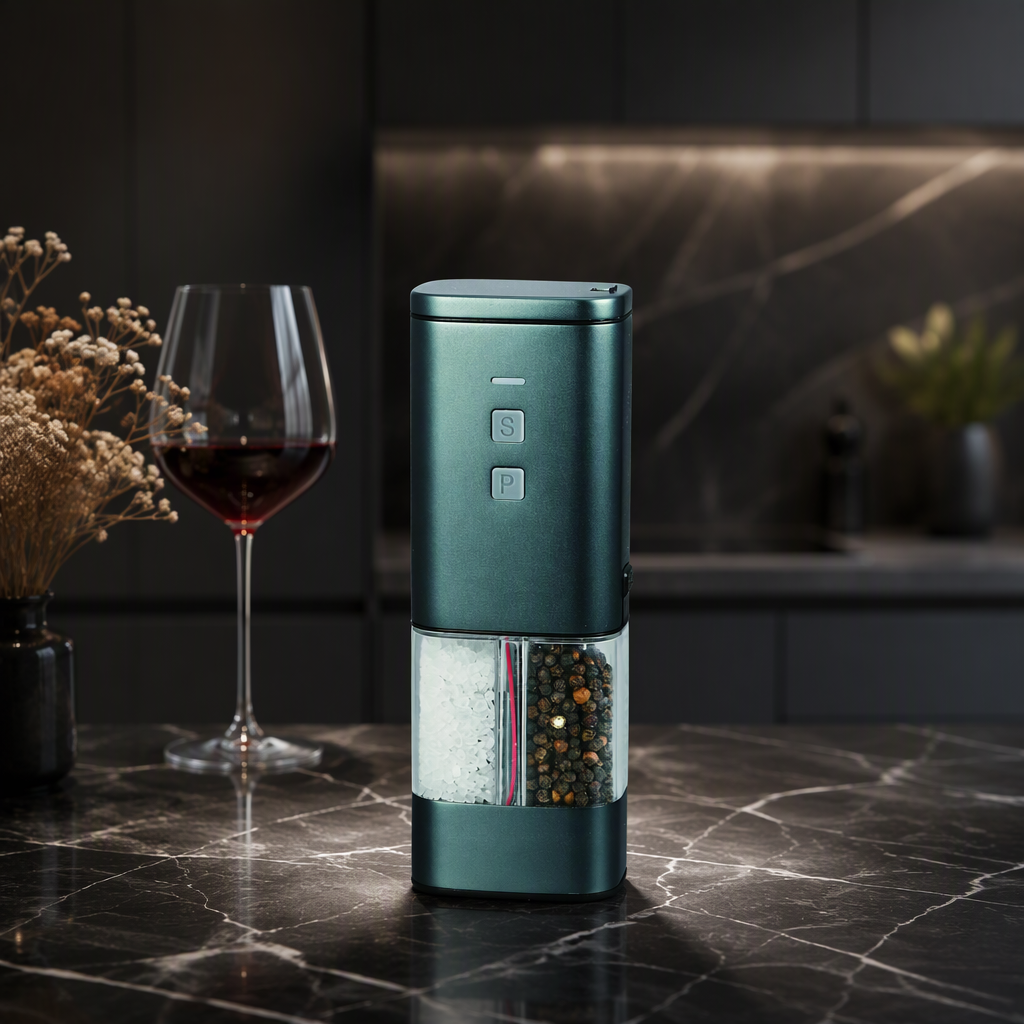
Dual Dock Contact-Charging Electric Mill Duo Set
- Integrated counter charging station
- High-hardness ceramic burr core
- Drop-in auto contact alignment
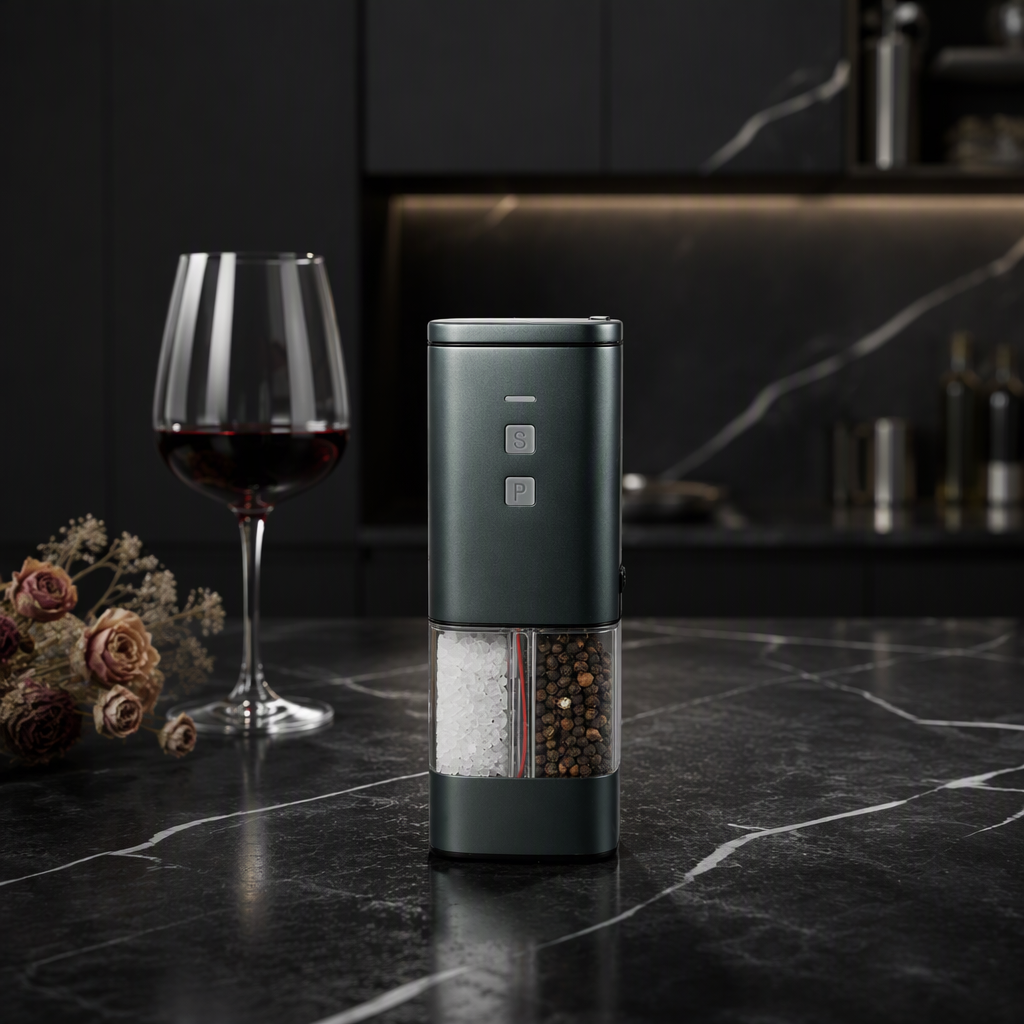
2-in-1 Dual Chamber Stainless Grinder in Mocha Matte
- Space-efficient dual rotor setup
- Brushed chocolate brown coating
- Fine-to-coarse manual adjuster
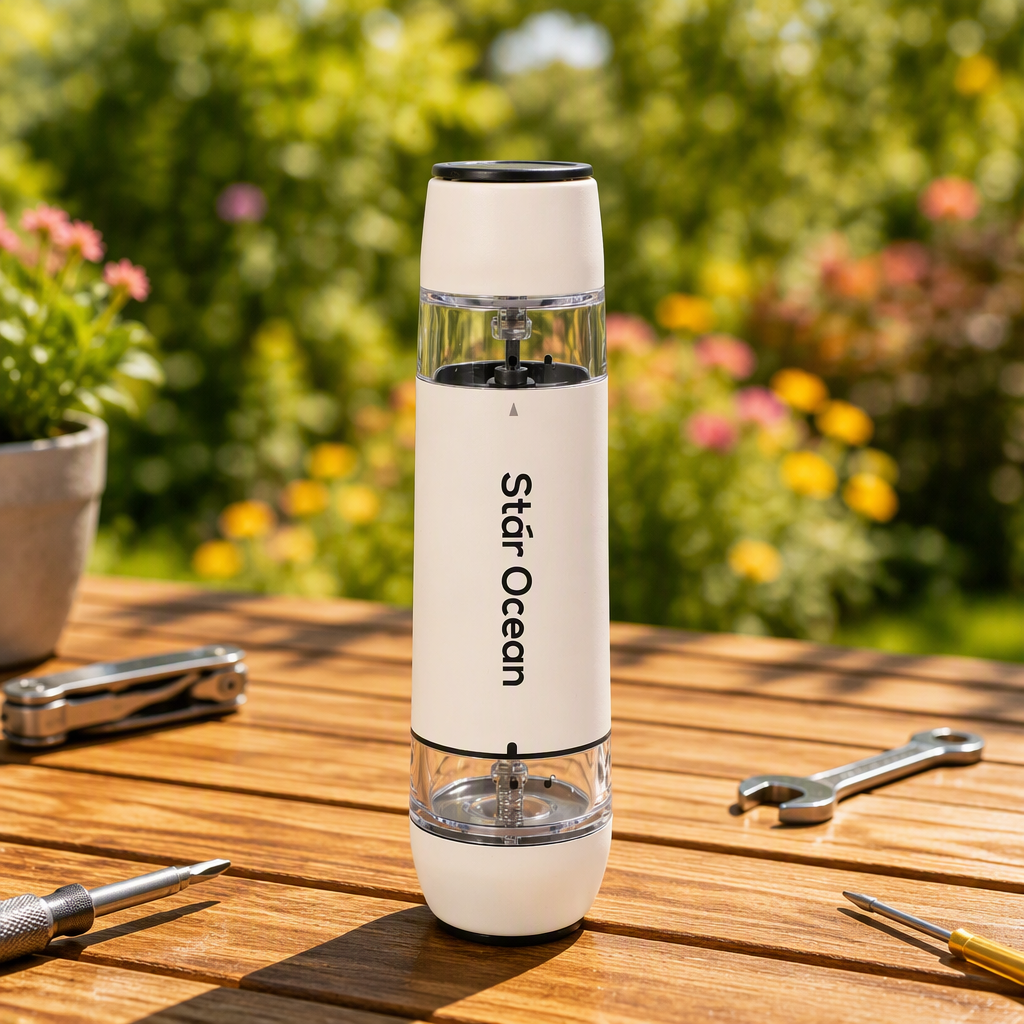
Commercial High-Yield Gravity Electric Spice Processor
- Reinforced high-load drive gear
- Large-capacity hopper container
- Engineered for coarse sea salt & dried herbs

Matte Black Anodized USB Rechargeable Heavy Mill
- Full alloy chassis with anti-fingerprint seal
- Fast Type-C recharging port
- Micro-calibrated grinding adjustment
Sourcing Architecture: French Press & Immersion Coffee Engineering for Stuttgart
For B2B procurement managers, contract roasters, and brand owners across Stuttgart and the broader Neckar Valley industrial basin, sourcing French press coffee hardware demands an uncompromising balance between thermal preservation, structural longevity, and microbiological cleanability. The classic immersion method relies on controlled water temperature decay, gentle hydraulic agitation, and mechanical boundary filtration. If the glass cylinder suffers from uneven thermal expansion or the perimeter spring assembly lacks uniform radial tension, fine grinds bypass the filter disc, resulting in an over-extracted, murky cup that damages premium specialty coffee branding.
As a verified Chinese manufacturer with over 23 years of specialized precision kitchenware production, Zhejiang BMDEV Plastic Industry Co., Ltd. solves these persistent failure points through vertically integrated engineering. Our OEM/ODM French press production lines utilize high-expansion-coefficient borosilicate glass 3.3 (capable of withstanding instantaneous thermal shock exceeding ΔT 150°C) coupled with CNC-machined, surgical-grade 304 and 316 stainless steel plunger cores. In Stuttgart's tech-driven market—home to global engineering standards shaped by the automotive and precision manufacturing sectors—commercial buyers do not merely buy kitchenware; they procure precisely calibrated brewing instruments.
BMDEV plungers utilize a high-density 80-to-120 mesh woven wire cloth reinforced with a spiral retention spring that exerts 12.8 N/cm² of continuous radial force against the inner glass wall. This eradicates the 85-micron sediment bypass common in retail consumer models, yielding a clear cup profile favored by European cupping judges.
Furthermore, commercial French press systems require holistic integration with companion manual and electric grinding equipment. Coarse French press extraction requires consistent particle distribution (typically 900 to 1,200 microns) with minimal fines (< 200 microns). At BMDEV, our dual focus on borosilicate immersion carafes and ceramic/stainless conical burr grinding systems enables B2B buyers in Baden-Württemberg to bundle coordinated, color-matched, and private-labeled coffee preparation ecosystems directly from one source factory.
Localized Commercial Application Scenarios Across Southern Germany
From the bustling specialty cafés of Stuttgart-Mitte to the corporate innovation campuses of Sindelfingen and Untertürkheim, customized French press brewers meet specific operational and aesthetic requirements.
Specialty Coffee Roasters & Cupping Labs
Third-wave roasteries in Stuttgart-West, Bad Cannstatt, and Ludwigsburg deploy branded 350ml single-origin tasting carafes. The non-reactive glass and medical-grade steel retain pure acidity and floral notes without aromatic contamination.
- Custom laser-etched graduation marks
- No-spill micro-filtered pouring spouts
- Low batch MOQs for limited edition bean drops
Corporate Tech & Automotive Pantries
Engineering headquarters in Feuerbach, Vaihingen, and Sindelfingen are replacing capsule waste with shatter-resistant, double-walled stainless steel thermal immersion presses designed for all-day self-service team breakrooms.
- Double-wall vacuum insulation (4h hot retention)
- Dishwasher-safe automated wash cycles
- Matte graphite and brushed industrial finishes
Boutique Hospitality & Schwarzwald Resorts
High-end hotels across the Baden-Württemberg wine country and Black Forest wellness retreats mandate silent, tableside immersion brewing that eliminates machine motor noise during luxury morning breakfast service.
- 1.0L family-size and 600ml sharing formats
- Cool-touch natural walnut or silicone handles
- Matched set companion salt/pepper mills
Department Stores & Retail Brands
Regional department retailers (e.g., Breuninger tier), homeware chains, and German Amazon FBA brand builders sourcing certified gift sets featuring customized colorways, barcode pre-labeling, and drop-tested master cartons.
- Full CMYK gift box packaging design
- ISTA-3A transit shock certified interior foam
- German language manual insertion
Baden-Württemberg Sourcing Trends & Regulatory Compliance (2025–2028)
Sourcing housewares and manual brewing equipment for distribution in Southern Germany requires rigorous navigation of evolving European Union sustainability decrees and federal German consumption standards. Buyers cannot treat French press makers as simple metal-and-glass containers; strict compliance testing determines warehouse entry and retail compliance:
LFGB Food Contact Testing
German Food, Feed and Consumer Goods Code (LFGB § 30 & 31) dictates far tighter limits for extractable lead, cadmium, and sensory taint than baseline European standards. BMDEV products undergo accredited migration testing ensuring zero organoleptic flavor impairment.
VerpackG & Circular Economy
Germany's Packaging Act (VerpackG) mandates LUCID registration and penalizes non-recyclable multi-layer plastics. Our packaging engineering line develops 100% unbleached kraft paper protective sleeves and molded corrugated pulp caddies, eliminating EPS foam.
Right to Repair & Modular Spares
Consumers in Stuttgart demand long-life repairability. BMDEV supports B2B clients by supplying standardized modular replacements—universal borosilicate glass cylinders, replacement silicone gaskets, and spare filter screens—ensuring multi-year product viability.
Factory Engineering Specifications vs. Generic Commodity Press
Evaluate the technical differences between BMDEV German-Export Grade French presses and typical low-cost wholesale marketplace alternatives.
| Technical Parameter | Standard Generic Marketplace Unit | BMDEV Export Engineering Benchmark | B2B Advantage for Stuttgart Buyers |
|---|---|---|---|
| Carafe Glass Material | Soda-lime or low-grade borosilicate (ΔT ~80°C) | High-Purity 3.3 Borosilicate Glass (ΔT ≥ 150°C) | Zero Cracking Under Boiling Pour |
| Steel Component Metallurgy | 201 series or unverified recovery steel | Certified SUS304 / SUS316 Food-Grade Stainless | Full Salt Spray & Acid Resistance |
| Plunger Mesh Density | 60 to 70 single-layer mesh (frequent bypass) | Dual-Stage 80 + 100 Micromesh with Edge Gasket | Sediment-Free Third-Wave Clarity |
| Food Contact Certification | Generic factory self-declarations | Intertek Tested, LFGB, FDA, CE/CB Ready | Frictionless German Customs Entry |
| Drop & Transit Packaging | Single-wall corrugated box, loose plastic bag | Drop-Tested High-Density Pulp Shell, Kraft Carton | <0.2% Transit Breakage Rate |
Vertically Integrated Manufacturing Rigor
Direct from our 12,538 m² manufacturing plant in Tongqin Town, Jinhua, Zhejiang. With 264 verified personnel and 10 dedicated in-house production lines, we eliminate subcontractor markups and maintain absolute quality discipline.
In-House Tooling & Molding
Operating precision injection molding, laser tube cutters, hydraulic bulging presses, and mechanical polishers in-house. We transform initial CAD sketches into production tooling in under 25 business days.
Direct Cost Optimization
By producing plastic moldings, metal punchings, and final assemblies under one roof, we eliminate intermediate trading margins, passing real cost advantages to German importers.
Intertek Assessed Rigor
Our complete facility, labor documentation, and manufacturing capacity have been assessed on-site by Intertek. Verified supplier standing for 21 consecutive export years guarantees reliable contractual execution.
Comprehensive OEM/ODM Scope
From private logo silk-screening, PVD coating (matte black, rose gold, vintage brass), to bespoke carafe geometries and retail packaging sets designed for German e-commerce or brick-and-mortar retail.
In-House Laboratory & Mechanical Reliability Testing
Every production lot intended for European markets undergoes five mandatory physical and electrical safety test gates prior to release.

Salt Spray Chamber
ASTM B117 salt corrosion resistance validation on all steel hardware and plungers.
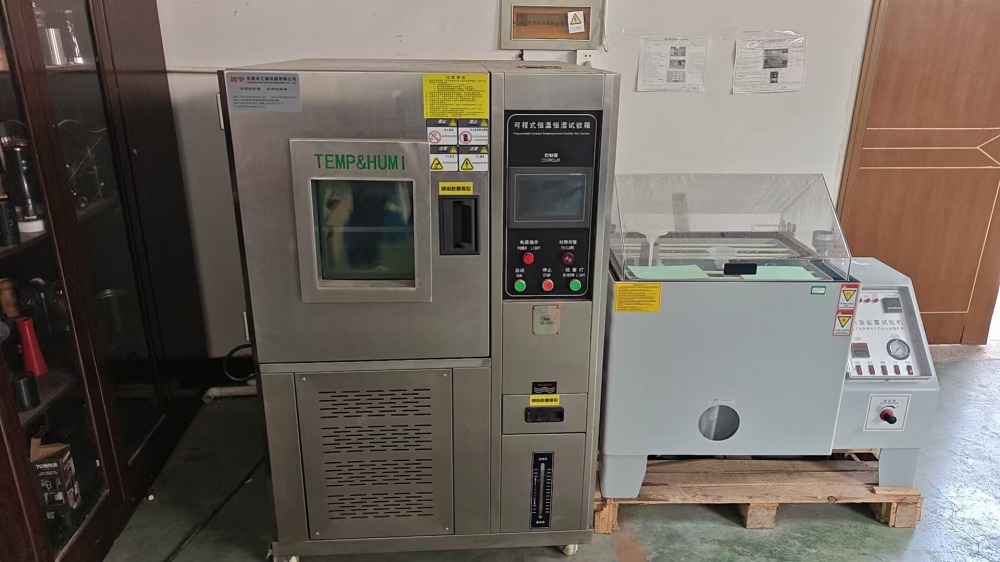
Thermal Stress Chamber
Programmable constant climate aging (-20°C to 120°C) for polymer and silicone parts.

Battery Cycle Testing
Charging profile, cell integrity, and thermal stability checks for electric grinders.
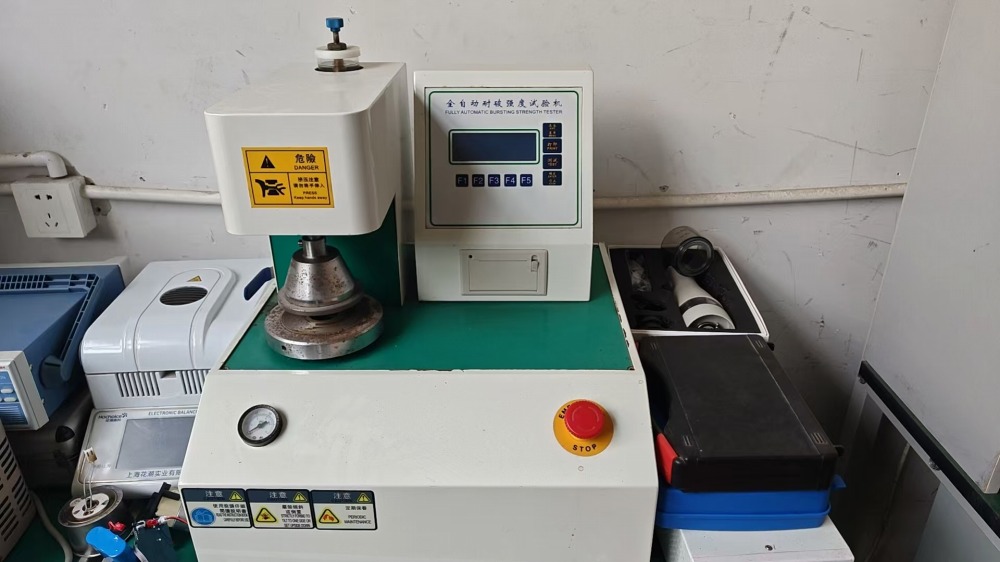
Bursting Strength Tester
Export packaging crush-resistance testing to safeguard glassware along sea routes.
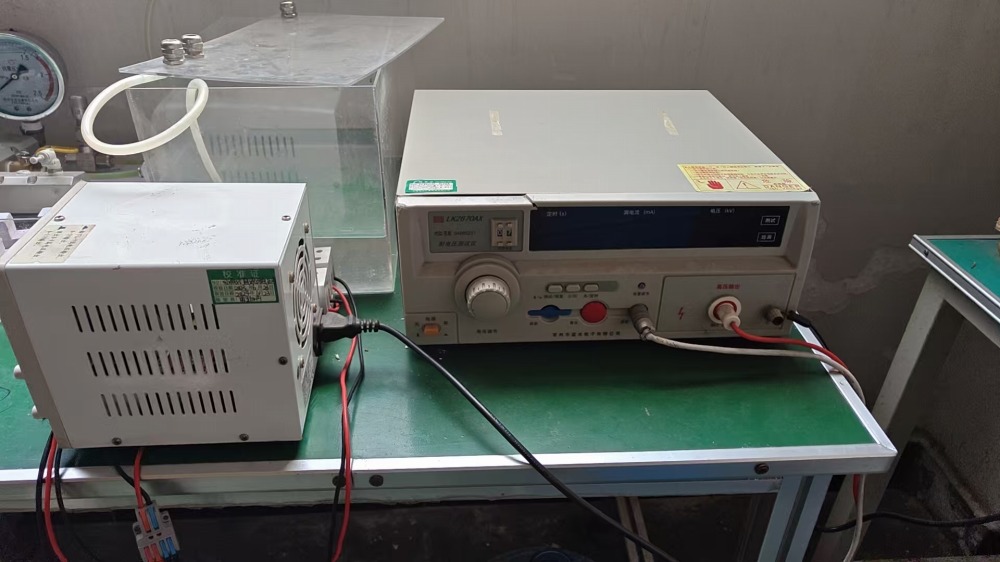
Voltage Endurance
Dielectric safety testing ensuring all electrical companion gear satisfies CE/CB limits.
Frequently Asked Questions by German Importers & Brands
Clear, direct answers regarding logistics to Stuttgart, food safety certifications, minimum quantities, and tooling lead times.
What are your minimum order quantities (MOQ) for custom-branded French press carafes? +
How does your factory ensure full compliance with German LFGB standards? +
What is the standard shipping lead time and routing to Stuttgart or Baden-Württemberg? +
Can you supply French presses bundled with precision companion grinders? +
Can we request replacement glass beakers and spare filter meshes for long-term supply? +
What is the procedure for launching a bespoke OEM/ODM shape or handle design? +
Ready to Develop Your Next French Press Line for the German Market?
Partner directly with an Intertek on-site verified manufacturer with 23 years of specialized kitchenware production. Request material samples, engineering consultations, and transparent wholesale price matrices today.
Send an InquiryZhejiang BMDEV Plastic Industry Co., Ltd.
- No. 68, Fenghuang Ave, Fenghuangshan Industrial Zone, Tongqin, Jinhua, Zhejiang, China
- [email protected]
- Dedicated English-Speaking B2B Sourcing Desk (Prompt German Business Hours Response)