Featured Grinder Solutions for the Austrian Market
Engineered with high-density ceramic grinding assemblies, 304 food-grade stainless steel housings, and rechargeable motor configurations matching European compliance standards.
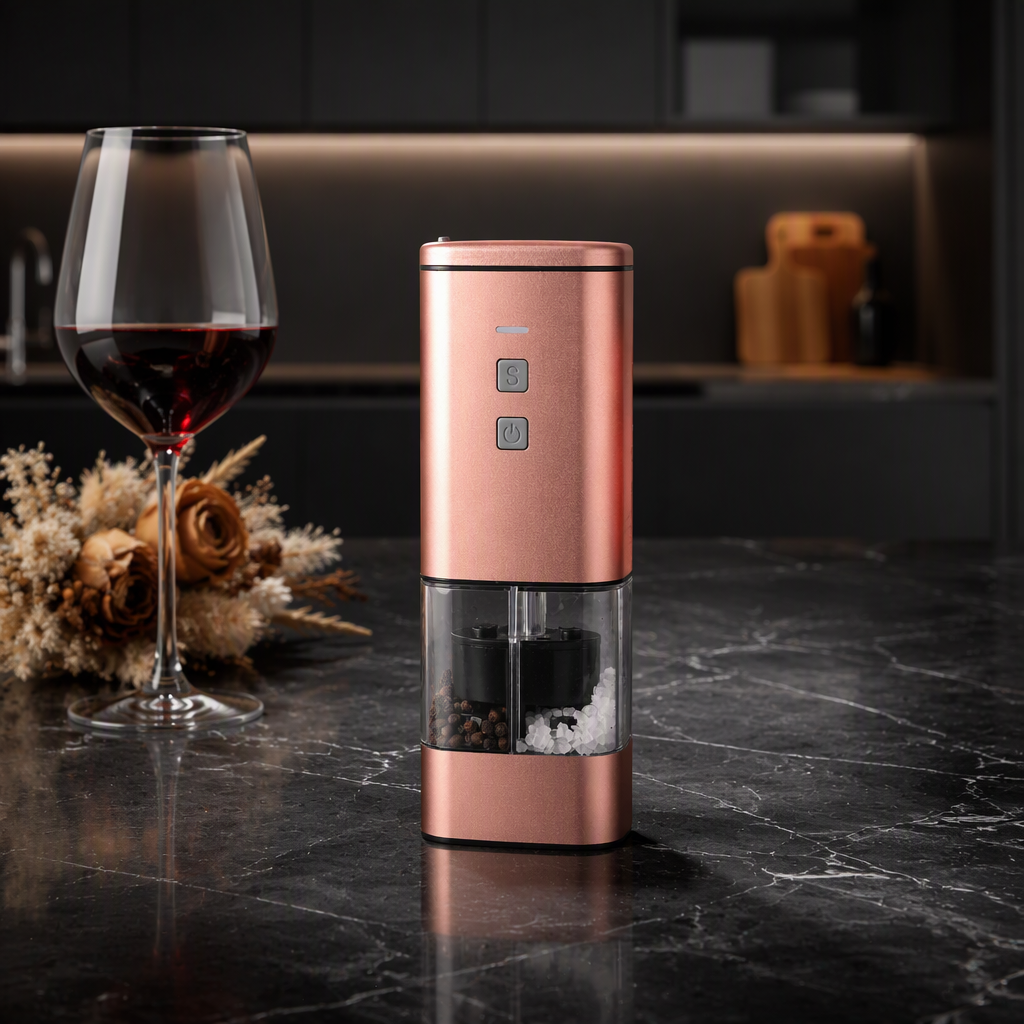
Lid Salt & Pepper Grinder Set Stainless Steel Ceramic Burr
- Food-contact tested 95% alumina ceramic mechanism
- Dust-proof seal preserving essential roast & spice aromas
- Brushed SUS304 exterior tailored for tabletop use
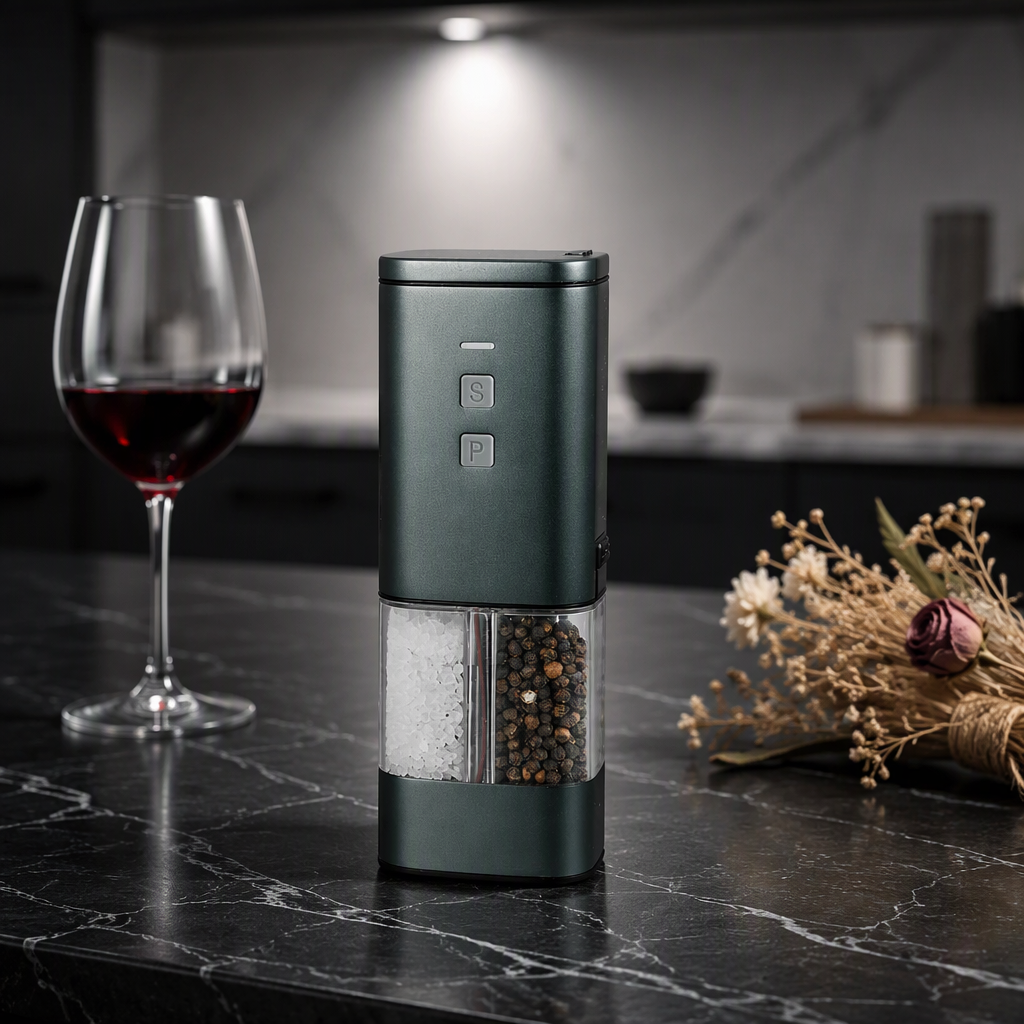
Thumb Operated Stainless Steel Spice & Bean Mill Set
- Single-hand mechanical piston compression mechanism
- Compact single-dose testing capacity for roasting cupping
- Heavy-gauge CNC turned aluminum and stainless body

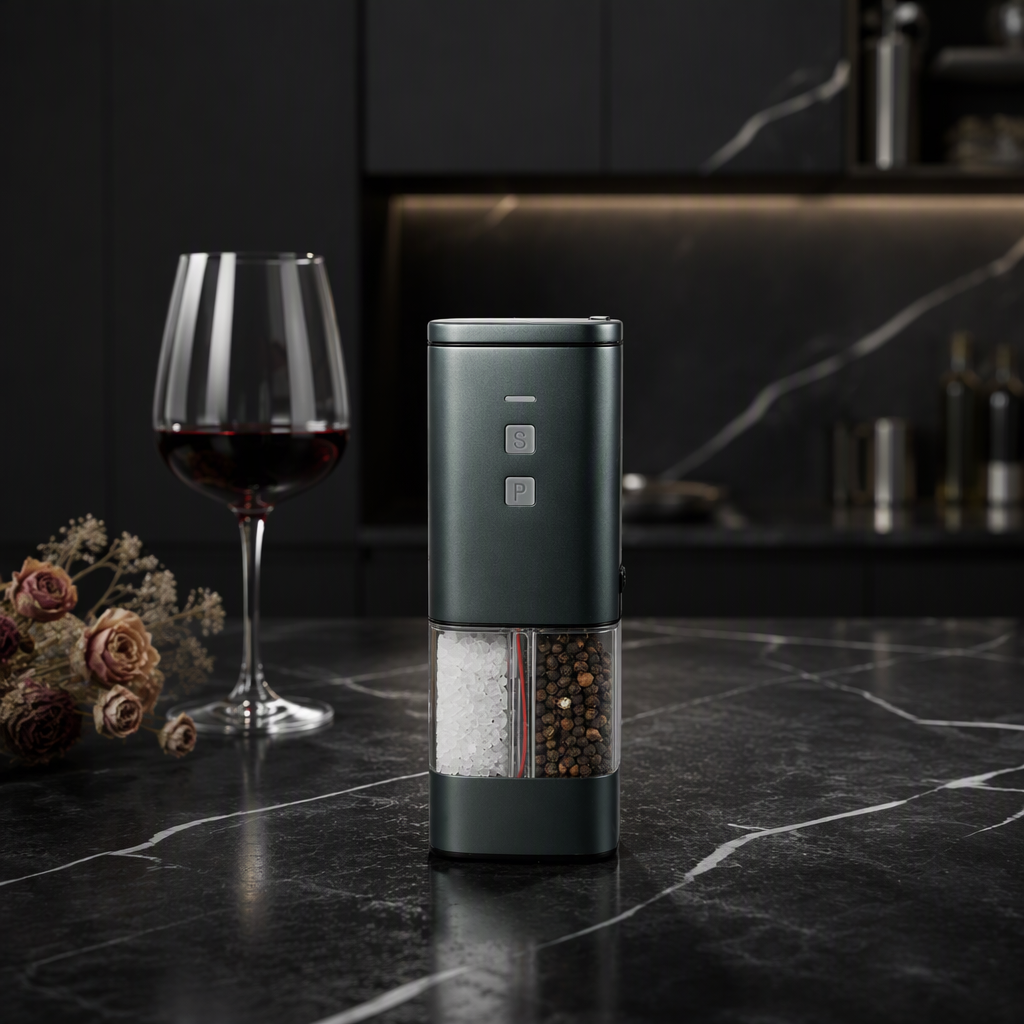
Electric Gravity-Sensing Grinder Gift Set with Ceramic Mill
- Automatic tilt-to-grind activation with low power draw
- Wear-resistant conical ceramic grinding core assembly
- Integrated soft LED lighting for precise dispensing control
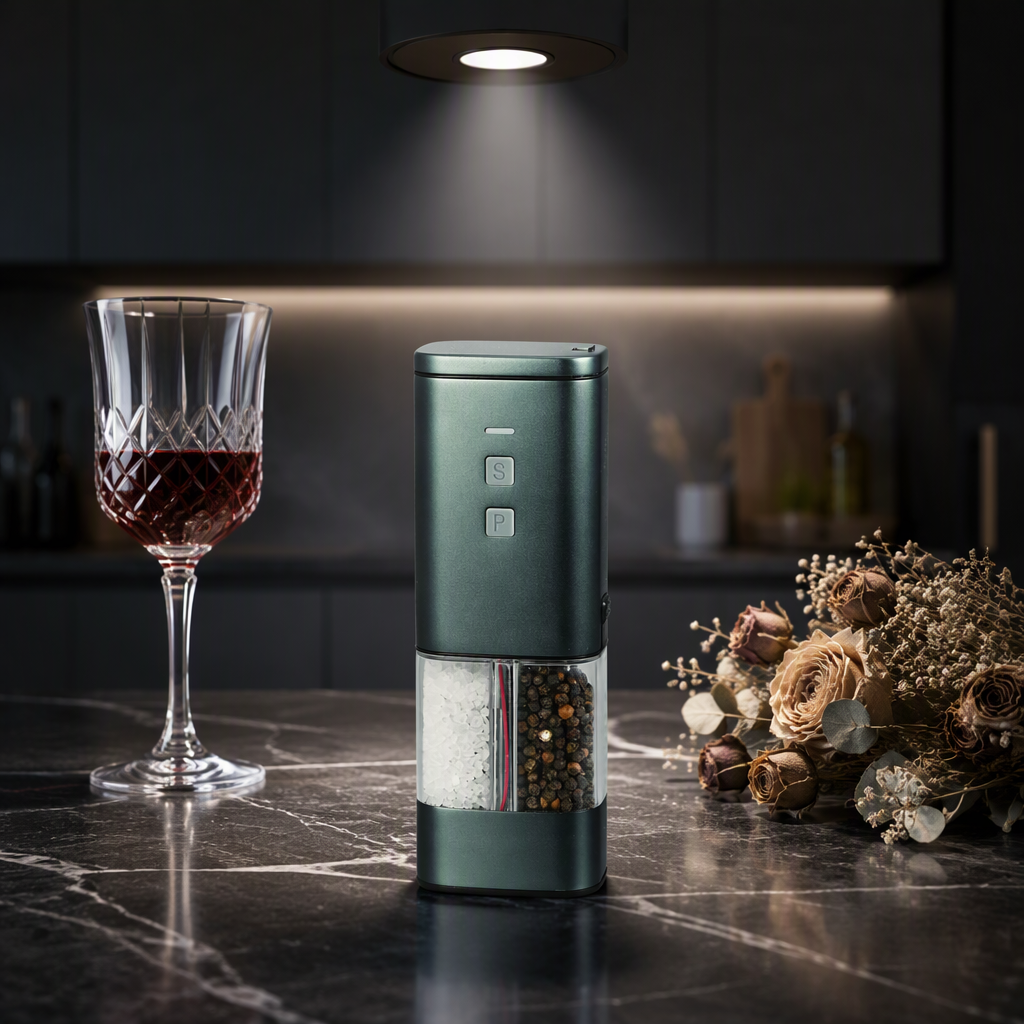
USB-C Rechargeable Adjustable Electric Precision Mill
- High-torque reduction gearbox preventing thermal transfer
- Stepless micro-adjustment from Turkish extra-fine to coarse
- Li-ion high-capacity battery certified with CE/RoHS

Tap Shape Antique Brass Dual Dock Electric Grinder Station
- Vintage Viennese café brass styling with contemporary tech
- Simultaneous magnetic induction charging base station
- Heavy-duty ceramic conical burr for zero flavor cross-transfer
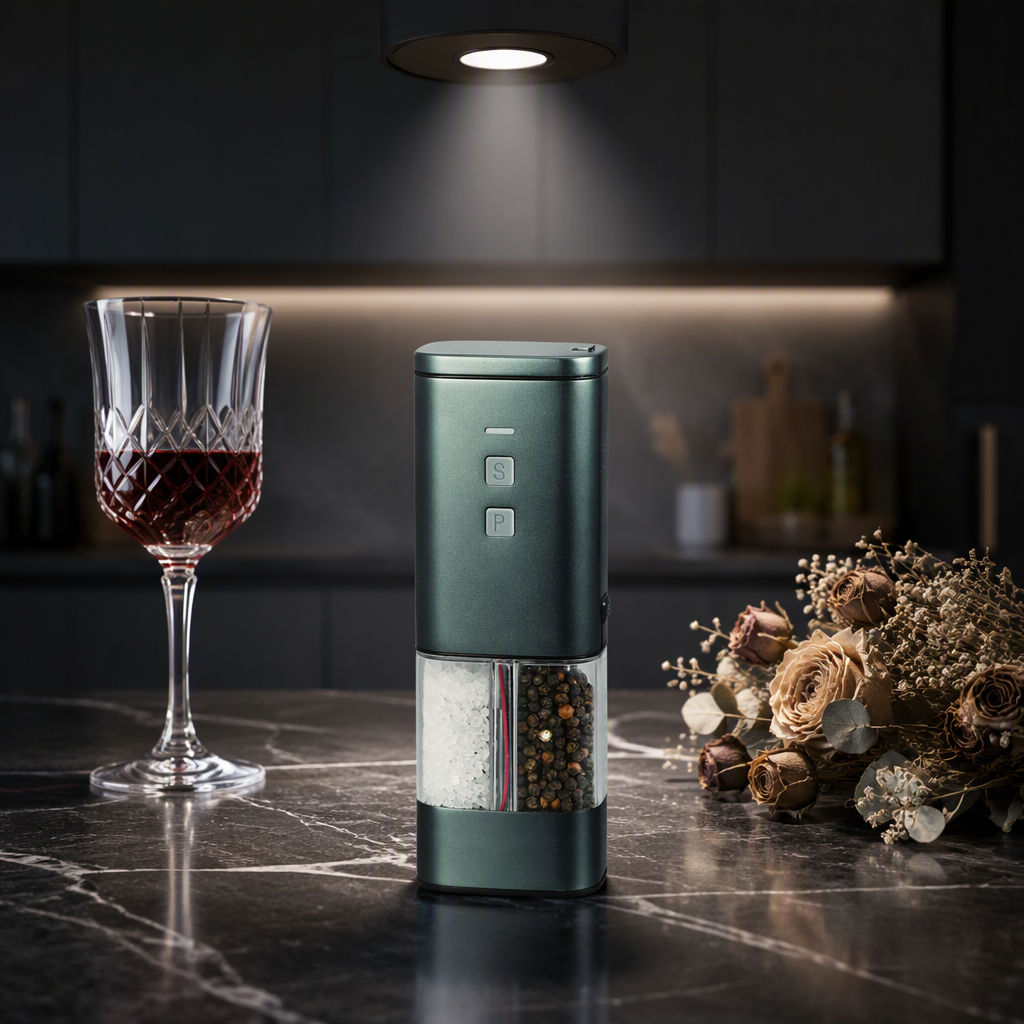
Custom Inox Electric Coffee & Specialty Dry Grinder
- Multi-purpose dual cavity engineered for roasters & culinary use
- Stainless steel shell featuring custom laser logo branding
- Low RPM planetary gears maintaining bean volatile compounds
2-in-1 Stainless Precision Grinder Set Chocolate Walnut Finish
- Double-ended dual ceramic burrs for combined seasoning or roasts
- Matte powder-coated tactile body resistant to kitchen grease
- Adjustable spring-loaded knob for micron-level particle tuning

Gold Finish Electronic Hospitality Tabletop Grinder Mill
- Mirror-polished titanium-gold PVD coating for luxury catering
- Reinforced ceramic conical burr with zero metallic oxidation
- One-touch button operation with auto shut-off safety cycle
Ceramic Burr Engineering for the Viennese Roast Profile
In traditional Viennese coffee craftsmanship, roasting sits precisely between medium and dark (Agtron 45-35), known globally as the "Vienna Roast." Understanding the tribological impact of burr metallurgy is critical for eliminating astringency in classic Melange and Einspänner preparations.
Tribological Insight for Coffee Technologists: Vienna roasts are characterized by internal bean cell wall embrittlement and surface oil migration. When ground with high-speed steel blades or low-grade stainless burrs, friction temperatures frequently exceed 55°C at the shear zone, causing rapid lipid rancidification and thermal degradation of delicate trigonelline compounds. Our specialized 95% Alumina ($Al_2O_3$) conical ceramic burrs maintain isothermal stability under continuous friction, guaranteeing zero localized thermal build-up during grinding cycles.
Thermal Neutrality ($k \approx 18 \text{ W/m}\cdot\text{K}$)
Ceramic burrs exhibit significantly lower thermal conductivity than stainless steel ($16-24 \text{ W/m}\cdot\text{K}$ versus $>50 \text{ W/m}\cdot\text{K}$). This ensures the volatile organic aromatics (pyrazines, furans, and aldehydes) central to Viennese hazelnut-chocolate cup profiles remain locked inside the grinds rather than vaporizing prematurely.
Micro-Fine Minimization
Viennese brewing methods, such as Karlsbad drippers (*Karlsbader Kanne*) and traditional French press vessels, require steep, unimodal particle distribution without micro-fines below 100 microns. Our precision-molded ceramic teeth crush beans via compression fracturing rather than slicing, producing uniform boulders with balanced extraction flow.
Inert Food Contact Purity
Alumina ceramics do not react with fatty acids, chlorogenic acids, or volatile moisture present in whole coffee beans. Unlike low-cost carbon steels, ceramic burrs remain 100% rustproof, dishwasher-safe for deep sanitation, and completely odorless across decades of intensive use.
| Performance Characteristic | BMDEV Alumina Ceramic ($Al_2O_3$) | Standard Martensitic Steel (420 SUS) | Rotary Cutting Blade Units |
|---|---|---|---|
| Hardness (Mohs Scale) | 8.8 - 9.0 (Diamond-approaching) | 5.5 - 6.0 | 4.5 - 5.0 |
| Grind Temperature Rise (ΔT) | < 2.4°C after 60s operation | +8.5°C to +14.2°C | +22.0°C to +38.0°C |
| Fines Ratio (<100μm in Coarse Setting) | < 6.8% (Optimal for Karlsbad & Melange) | 12.4% (Standard) | > 28.5% (High Sludge Factor) |
| Corrosion Resistance (NSS Salt Spray) | Immune (Inorganic Oxide Matrix) | 72h Standard | 24h Degradation |
| Acoustic Emission at 150 RPM | ≤ 58 dB(A) Smooth crushing sound | 68 - 72 dB(A) Metallic shearing | 82 - 88 dB(A) High-pitched whine |
| Viennese Roastery Suitability | Optimal for Retail Gift Packs & Cupping | Fast High-Throughput Commercial Bins | Unsuitable for Specialty Extractions |
From UNESCO Kaffeehaus Heritage to Neubau Micro-Roasteries
Vienna's coffee ecosystem is a sophisticated blend of world-renowned traditional institutions and modern third-wave micro-roasters. Sourcing the right ceramic burr grinder hardware allows Austrian retailers and hospitality chains to bridge classical elegance with extraction science.
Historic Coffeehouses (*Traditionscafés*)
Establishments near the Ringstraße, Innere Stadt, and Herrengasse demand equipment that reflects imperial heritage while meeting high sanitary standards. Our antique gold, tap-shape, and walnut-finish manual mills sit effortlessly atop marble café tables, allowing guests to grind freshly roasted beans table-side for their Verlängerter or Großer Brauner.
Third-Wave Specialty Roasters in District 7
In vibrant neighborhoods like Neubau, Leopoldstadt, and Alsergrund, artisanal roasters focus on single-origin, light-to-medium roasts from Ethiopia, Colombia, and Kenya. These venues package our branded USB-C rechargeable ceramic burr grinders as private-label merchandise, providing their customers with a zero-heat, travel-friendly brew kit.
Vienna Culinary Retail & Private Label Gift Sets
Austrian gourmet specialty retailers (such as upscale delicatessens around the Naschmarkt and premium department stores on Kärntner Straße) require coordinated dual-dock and gift-boxed grinding appliances. Our dual-purpose ceramic core series effortlessly shifts between specialty whole-bean coffee and coarse alpine rock salt or Styrian pepper blends.
Market Trends Driving Grinder Procurement in Austria
Austrian consumer purchasing behavior is heavily guided by sustainability, durability, low acoustic footprint, and stringent food safety protocols governed by both Austrian Food Law (*Lebensmittelsicherheits- und Verbraucherschutzgesetz - LMSVG*) and EU regulations.
The "Zero Single-Use" Shift
With Austrian municipal eco-initiatives and the EU Circular Economy Action Plan discouraging disposable pod systems, consumers across Vienna are returning to whole-bean grinding. Sourcing compact electric and manual ceramic mills allows brands to capture buyers switching to waste-free drip, moka pot, and pour-over rituals.
Acoustic Comfort in *Altbau* Living
Vienna's high proportion of classic pre-war apartment buildings (*Altbau*) with timber floors creates a unique demand for ultra-quiet domestic appliances. Our direct-drive planetary gear motors operate under 60 decibels, allowing early-morning grinding without acoustic disturbance through shared apartment walls.
Single-Dosing Precision Culture
Austrian coffee purists avoid long bean hopper storage that exposes coffee to oxygen. The localized trend favors zero-retention manual conical grinders and single-dose electric units that grind exactly 15g to 22g per batch, ensuring freshness for every cup of freshly extracted coffee.
Vertically Integrated Manufacturing Powerhouse
Zhejiang BMDEV Plastic Industry Co., Ltd. delivers direct factory engineering, tool-making, molding, precision metal-stamping, and cleanroom assembly under an Intertek on-site audited quality management system.
Modern Industrial Footprint
Spread across automated injection workshops, metal spinning, CNC laser tube cutting, and assembly lines in Jinhua, Zhejiang.
Independent Audit Credibility
Third-party on-site audited production capability, labor standards, and physical infrastructure with complete verified documentation.
End-to-End Production
From initial raw material inspection and bulging to polishing, assembly, and export drop-testing without sub-contractor delays.
Custom Tooling & Mold Design
In-house 3D rapid prototyping, injection mold development, laser etching, pantone matching, and customized packaging creation.
Our 10-Step In-House Production Process
Every component of our ceramic burr grinders and spice mills undergoes controlled, station-by-station validation to ensure zero-defect output for overseas containers arriving in Vienna.
Raw Material Lab Verification
High-Precision Injection Molding
CNC Metal Bar Cutting
Automatic Punching Line
Laser Precision Cutting
Hydraulic Bulging Line
Mirror & Satin Polishing
Stationary Inline QC Inspection
Dust-Free Component Assembly
Export Drop-Test & Packing
In-House Quality Control & Testing Facility
Austrian buyers expect long product lifespans and complete regulatory adherence. Our in-house testing lab evaluates every production lot against rigorous mechanical, environmental, and electrical parameters.
Salt Spray Corrosion Chamber
We test all 304 and 430 stainless steel grinder shells, shafts, and fasteners through 48-to-96 hour neutral salt spray (NSS) corrosion testing to prevent surface pitting caused by kitchen steam, acidic roasts, or ambient humidity.
Thermal & Humidity Cycling
Our programmable climate chambers test plastic resin stability and burr tolerances across thermal swings from -25°C to +80°C. This guarantees that acrylic bean catchers and ABS housing components will never warp or crack over seasonal temperature changes.
Battery Safety & Voltage Endurance
All rechargeable units undergo high-voltage endurance testing, short-circuit protection testing, and automated battery charge/discharge cycling up to 500 complete cycles to comply with EU Battery Directive and UN38.3 transport standards.
Austrian Importers & Procurement FAQ
Clear, technical answers to common compliance, shipping, and customization questions asked by buyers in Vienna, Graz, Linz, and Salzburg.
Launch Your Custom Grinder Project for Vienna & Central Europe
Connect directly with our engineering team to request sample units, CAD drawings, compliance dossiers, or factory-direct volume pricing tailored to your brand specifications.