The Evolution of Gravity Salt & Pepper Mills: Engineering Architecture
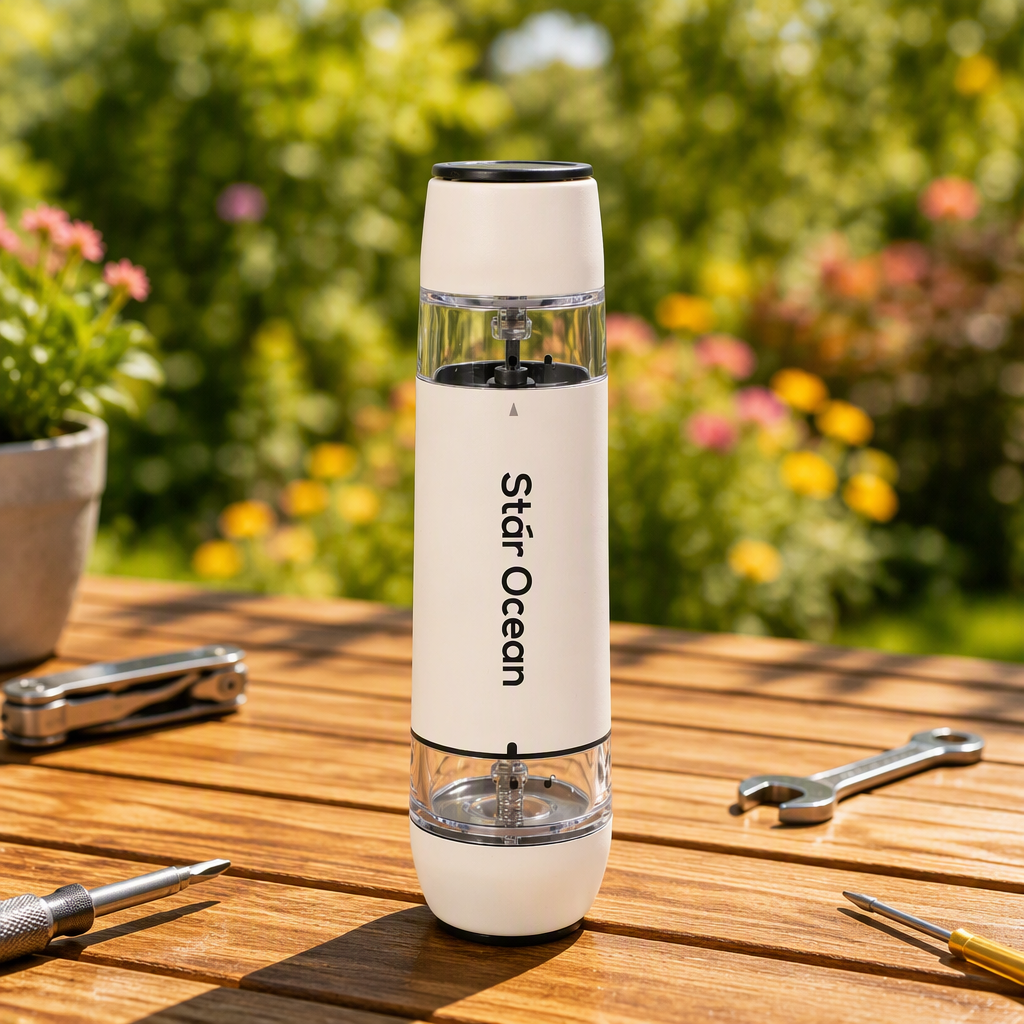
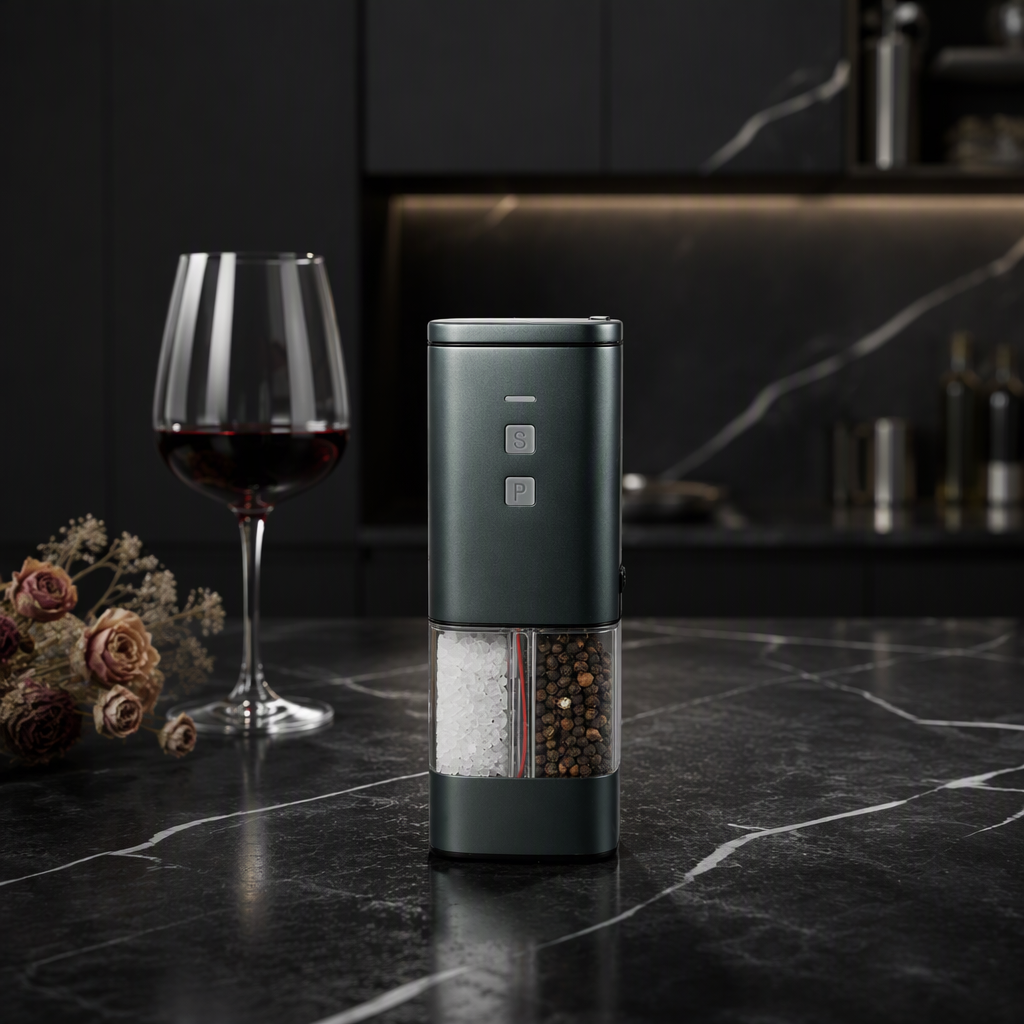
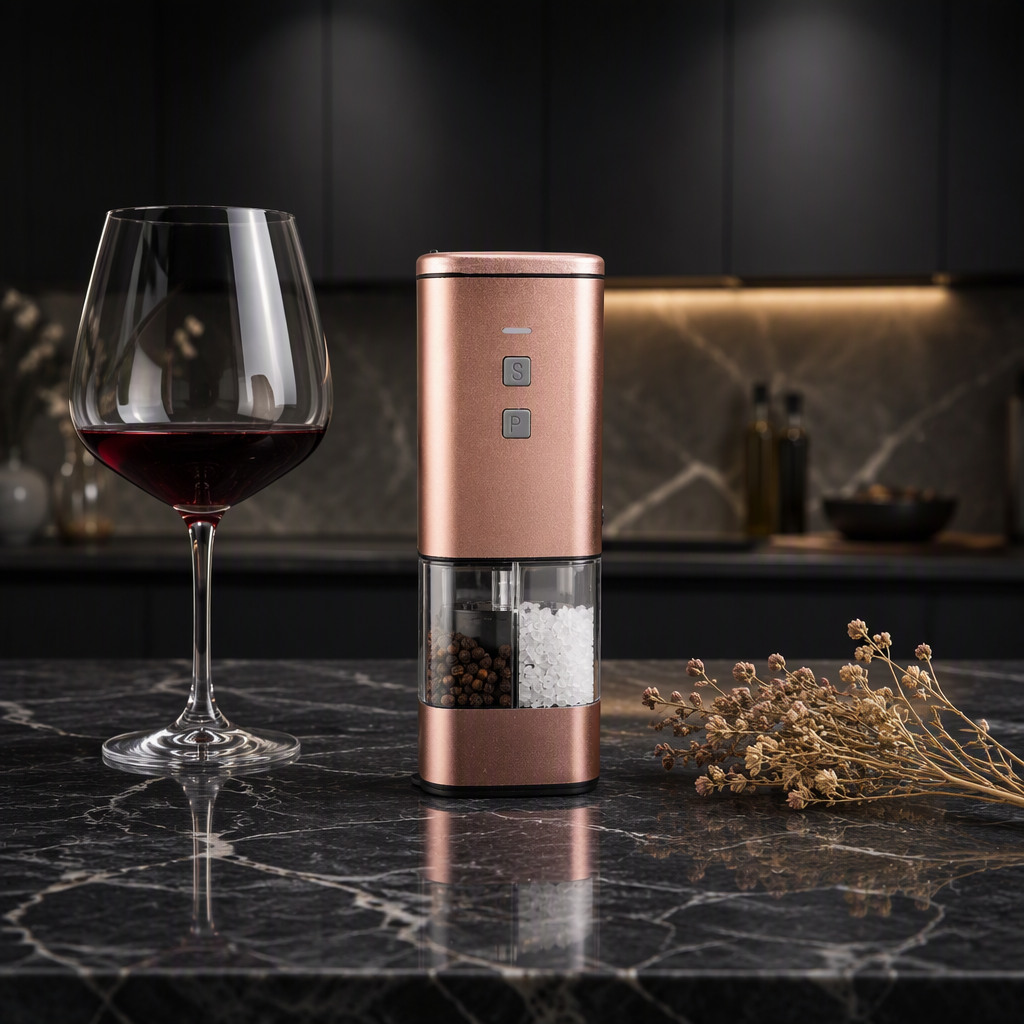
Modern culinary devices have transitioned from mechanical novelty items to essential kitchen instruments requiring strict precision engineering. Gravity pepper grinders operate by employing internal micro-electromechanical systems (MEMS) tilt sensors or mechanical ball-bearing directional contacts. When rotated beyond an angle of 45 degrees, the internal switch closes the low-voltage circuit, activating an electric micro-motor that routes kinetic energy through a planetary or spur gear reducer directly into an alumina ceramic conical burr set.
Unlike standard manual twist grinders or top-mounted single-button electric mills, gravity mills eliminate physical palm torque and cross-contamination risks entirely. When preparing poultry or pastry dough, culinary professionals and consumers frequently have grease or egg yolk on their hands. A gravity mill allows for one-handed operation simply by picking up and tipping the unit over the food. Engineering challenges traditionally found in lower-tier factories—such as contact oxidation, premature battery drainage, ceramic core binding, and spice chamber clogging—are resolved through precision injection-molded components, hermetic internal gaskets, and heavy-duty motor gearboxes manufactured directly in our Zhejiang industrial facility.
| Component Dimension |
Legacy Low-Tier Mills |
BMDEV Industrial Standard Gravity Mills |
| Tilt Activation Tech |
Loose mercury/simple mechanical contact (intermittent lag) |
Solid-state precision tilt switch with gold-plated contacts |
| Grinding Core Assembly |
Standard coarse pressed ceramic or cast iron (corrosive) |
High-density hot-isostatic-pressed 96% alumina ceramic burr |
| Powertrain & Gearbox |
Thin recycled plastic gears prone to stripping at hard knots |
Reinforced polyoxymethylene (POM) or alloy sintered gear train |
| Power Management |
6x AAA dry batteries (high lifetime footprint cost) |
Integrated 3.7V Type-C lithium battery with IC protection circuit |
| Chamber Integrity |
Brittle non-certified polystyrene (PS) |
Food contact-grade BPA-free Eastman Tritan™ or soda-lime glass |
As international consumer protection agencies increase surveillance over food-contact items, factories must adapt. BMDEV operates dedicated environmental and mechanical testing laboratories equipped with continuous salt spray testing chambers, climate chambers, battery cycling stations, and carton bursting testers. This holistic vertical integration ensures every lot leaving our Tongqin industrial zone complies precisely with EU LFGB, US FDA, CE, and RoHS directives.
Global Sourcing Dynamics: Market Trends & Next-Gen Developments (2025–2030)
Procurement directors and private-label brand managers managing kitchenware portfolios must anticipate changing international consumer expectations. Five overarching structural shifts are transforming the commercial landscape for electric and gravity seasoning mills:
01
USB-C Standardization
Consumers are abandoning multi-battery devices. Integrated lithium-ion batteries with universal USB-C ports reduce post-purchase friction and packaging bulk.
02
Multi-Pod Docking Sets
Dual base-station inductive docking stations are replacing independent charging cables, offering an organized, retail-ready countertop presentation.
03
Plastic-Free Interiors
Growing concern over microplastics in culinary preparations has driven high-end demand for all-metal motor mounts, stainless bodies, and glass vessels.
04
Unified Culinary Sets
Importers gain higher container utilization by sourcing coordinated sets combining coffee grinders, gravity pepper mills, and rotating spice racks from one single partner.
Sourcing directly from a comprehensive manufacturing factory enables brands to maintain pricing margins while ensuring identical industrial finishes—matching brushed textures, exact anodized hues, and uniform silicone touchpoints across multiple product SKUs.
Integrated Manufacturing Excellence
Why Top Global Importers Choose Zhejiang BMDEV
For more than two decades, Zhejiang BMDEV Plastic Industry Co., Ltd. has bridged the gap between rapid Chinese industrial manufacturing and strict Western compliance criteria.
Fully Integrated Production Chain
From plastic injection molding and metal tube cutting to stamping, hydraulic bulging, polishing, and automated assembly, every critical process is controlled in-house to protect intellectual design and delivery schedules.
Verified Intertek Factory Assessment
Our 12,538-square-meter campus and 264-person workforce have undergone comprehensive on-site third-party evaluation by Intertek, confirming verifiable trade capability, authentic floor machinery, and social audit transparency.
In-House Mechanical & Electrical Testing
Each batch undergoes accelerated salt spray chamber corrosion analysis, temperature/humidity cycling, battery cell load cycling, and export drop simulation to minimize return rates for global supermarket buyers.
Flexible OEM / ODM Customization Scope
Whether you require basic laser logo marking on stainless sleeves, customized pantone mold injection, bespoke high-end color gift packaging, or ground-up functional ODM mechanical tooling, our engineering department delivers.
Global Logistics & Export Readiness
Located in the heart of Zhejiang's manufacturing corridor, we offer rapid container access to Ningbo and Shanghai maritime ports, supported by comprehensive palletized packaging, drop testing, and international freight documentation.
Ranked #10 Most Popular Mill Factory
With an export record spanning 21 consecutive verified export seasons, our product reliability and high customer retention rates position us as a primary manufacturing partner for household names in retail and online commerce.
What is the minimum order quantity (MOQ) for custom-branded gravity pepper grinders?
Our MOQ structure depends on the selected level of customization. For standard stock models requiring minor private labeling (such as precision laser-engraved logos and custom outer barcodes), pilot runs start as low as 500 to 1,000 units. For full OEM production runs—including custom-colored injection plastics, bespoke gift packaging, or specific surface plating (e.g., brushed brass, chocolate brown, matte black)—standard factory production runs begin at 1,000 to 2,000 sets. Evaluation samples can be dispatched promptly for engineering review.
Why is a high-density ceramic grinding core preferred over stainless steel in salt and pepper mills?
While stainless steel burrs are prized in coffee grinding for sharp uniform shear cutting, they are susceptible to rapid chemical corrosion and pitting when exposed to sodium chloride (sea salts and rock salts). Alumina ceramic is completely inert, impervious to salt moisture rust, and harder than standard steel. Our food-grade conical ceramic grinding rotors ensure zero flavor contamination, extended edge retention, and smooth coarseness adjustment from powder-fine to cracked coarse pepper.
How do BMDEV gravity grinders prevent common tilt switch latency and misfires?
Budget gravity mills often use cheap mechanical rolling ball switches that stick or trigger accidentally during routine handling. BMDEV utilizes directional tilt contacts with defined activation angles (specifically calibrated between 40° and 45°). In rechargeable lithium configurations, solid-state micro-controllers filter out false triggers caused by sudden movements or slight table vibrations, ensuring current flows to the motor only when the grinder is deliberately inverted over cookware.
What food contact and electrical certifications accompany BMDEV shipments?
As a manufacturer verified on-site by Intertek, our production standards conform to major international requirements. Depending on the model and destination port, we can supply test certificates and compliance documentation covering EU LFGB, US FDA food contact compliance, CE, CB scheme reports for electric consumer goods, RoHS material safety, and UN38.3 lithium battery transport certification. In addition, our manufacturing operations comply with ISO 9001 and BSCI social criteria.
Can our engineering team commission custom-designed housings (ODM tooling)?
Yes. Zhejiang BMDEV operates in-house tooling, CNC, mold-making, hydraulic bulging, and laser processing lines. If you provide 3D CAD files (.STEP / .IGS) or an industrial styling concept, our R&D team can perform structural analysis, optimize wall thicknesses for plastic injection, draft mold layouts, and produce functional rapid prototypes within 15 to 20 working days prior to mold steel fabrication.
How does the factory prevent peppercorn jamming and motor stalls?
Stalling occurs when large, dense peppercorns wedge between the rotor and stator without sufficient motor torque to crush them. BMDEV utilizes high-torque DC micro-motors paired with reinforced planetary reduction gearboxes that generate ample crushing force at optimal operational RPM. Furthermore, our ceramic burr lead-in flutes feature variable-pitch cutting geometries designed to crack outer shells before drawing pieces into the fine grinding zone.
What are the standard lead times for mass production and container shipments?
For repeat OEM orders with confirmed art approval, typical production turnaround ranges from 30 to 40 days from deposit receipt. First-time customized production involving specialized packaging tooling or custom molded elements runs approximately 45 days. Our central location in Jinhua, Zhejiang offers efficient transport to the deepwater container ports of Ningbo and Shanghai.
Ready to Scale Your Kitchenware Portfolio?
Connect directly with our engineering and commercial sales division in Zhejiang. Receive detailed product catalogs, compliance reports, and tailored OEM price quotations for your brand.
Get a Quote