Engineered Hardware Portfolio
Precision-milled electric, manual, and gravity-fed kitchen extraction appliances optimized for private label programs

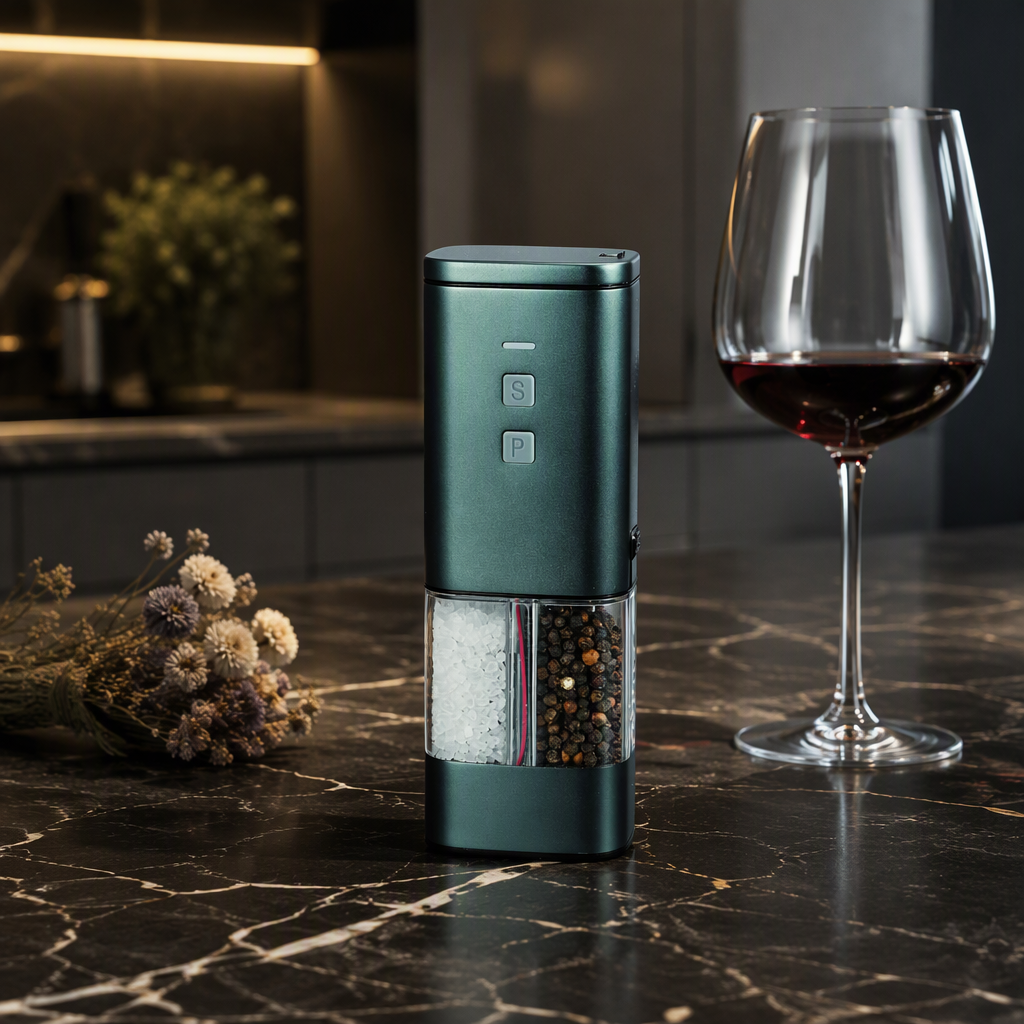
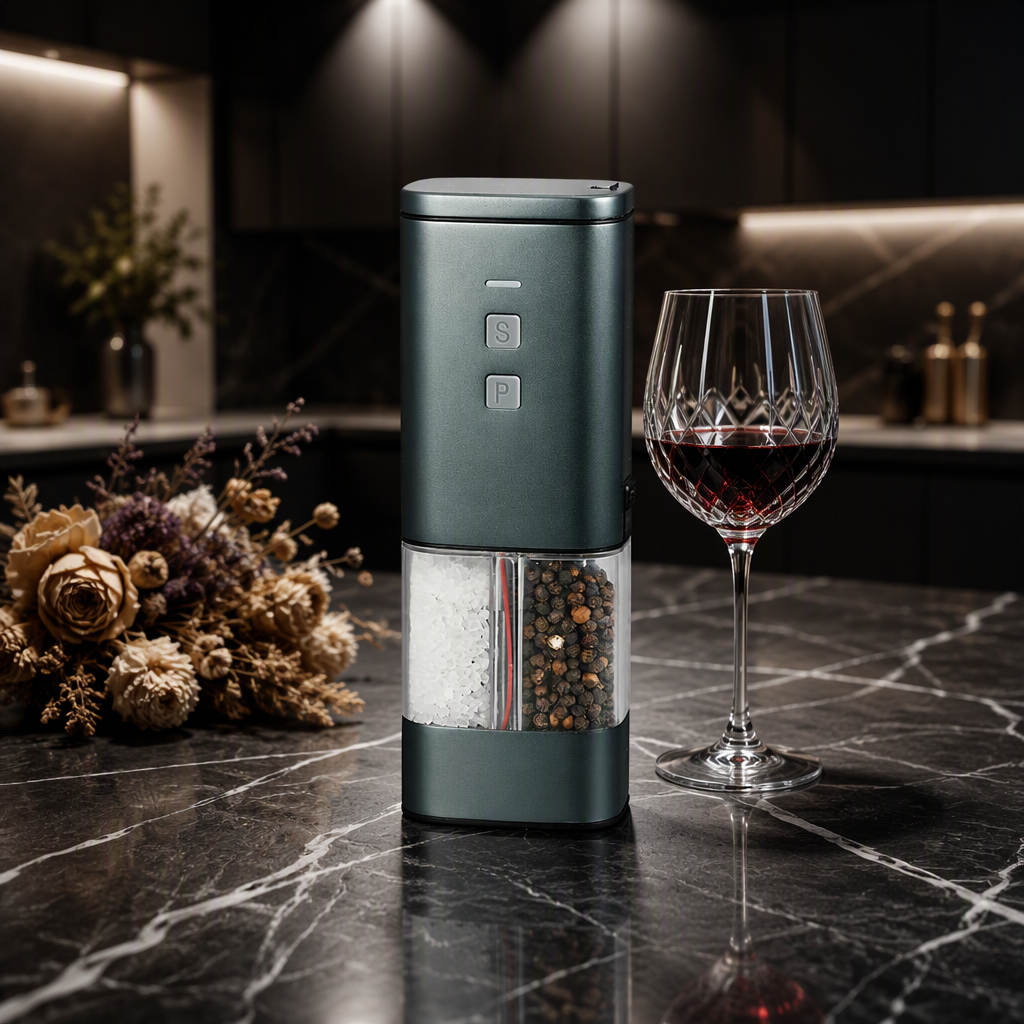
Rechargeable Salt Pepper Grinder Set Electric Gravity Operation
Equipped with an advanced tilt-switch gyro sensor and high-torque motor for automated one-handed seasoning and coarse grind regulation.
- USB-C Rechargeable Cell
- Ceramic Coarse-Cut Rotor
Salt and Pepper Grinder Set Colorful Bead Ergonomic Mill
Designer stainless-steel culinary tool featuring custom anodized silicone tactile beads, brushed food-grade alloy body, and smooth manual delivery.
- SUS304 Enclosure Body
- Multi-Stage Gap Adjustment

Electric Pepper and Salt Grinder Set Tap Shape Architecture
Patented ergonomic tap silhouette engineered to prevent wrist strain while housing an ultra-durable planetary gear reducer system.
- High-Efficiency Gearset
- Food-Safe Acrylic Hopper
Vintage Adjustable Precision Coarseness Manual Grinder
Combines heritage aesthetic aesthetics with modernized industrial-grade grinding cores for uniform coarse particle extraction.
- Precision Hardened Core
- Low Thermal Transfer
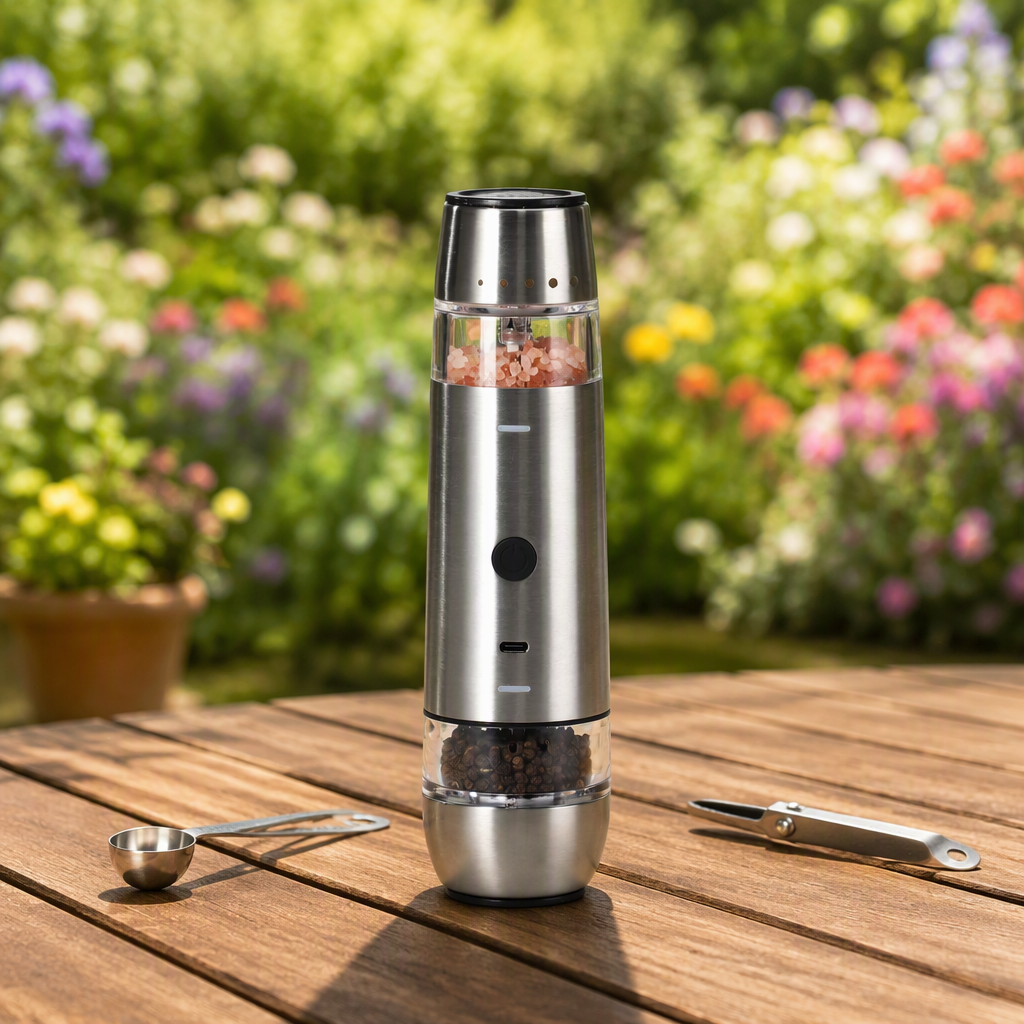
Battery Adjustable Salt and Pepper Grinder Customized
Compact, durable culinary tool designed for high-turnover retail programs, featuring streamlined component integration and push-button activation.
- Quick-Change Battery Bay
- Anti-Corrosion Chamber

Tap Shape Dual Dock Electric Salt and Pepper Grinder
Premium dual-dock induction charging base setup with antique gold physical vapor deposition (PVD) finish, targeting luxury hospitality suites.
- Dual Contact Fast-Charge
- Metallic PVD Coating

Battery Operated Heavy-Duty Kitchen Pepper Grinder
Reinforced polymer framework paired with hardened ceramic shearing mechanisms capable of processing dense peppercorns and pink Himalayan rock salts.
- Shock-Resistant Shell
- Built-in LED Task Illuminator

Gold USB Rechargeable Pepper and Spice Mill Set
High-capacity lithium battery platform coupled with a rust-free ceramic burr geometry engineered for fine powder or coarse cracking versatility.
- Lithium-Ion Endurance Pack
- Corrosion-Proof Shaft
Industry Whitepaper: The Convergence of Cold Brew Brewing and Grind Mechanics
In contemporary beverage engineering, cold brew extraction is governed strictly by the physical laws of steady-state solid-liquid mass transfer. Unlike traditional hot pour-over or espresso brewing methods where thermal kinetic energy breaks cell walls and accelerates diffusion, cold water extraction operates between 2°C and 18°C over extended temporal windows (12 to 24 hours). Consequently, extraction efficiency is almost completely dictated by particle size distribution (PSD) and channel resistance within the grounds column.
Procurement specialists and commercial brand owners seeking premier cold brew maker suppliers must scrutinize not only the brewing vessel’s glass filtration porosity but also the upstream grinding appliances paired with the units. Uneven grinds yield excessive fines (particulates <100 µm) that slip through stainless mesh filters, producing turbidity, premature oxidation, and bitter astringency due to over-extraction. Conversely, overly uniform boulder particles without adequate surface area cause watery, underdeveloped flavors. Precision cold brew production requires tailored conical or flat burr geometries that maximize particle uniformity between 850 µm and 1200 µm, ensuring optimal flow kinetics and clean cup clarity.
Immersion Extraction Vessels
Utilizes ultra-fine food-grade SUS304 or SUS316 laser-cut mesh filters (typically 100 to 200 mesh) submerged in borosilicate carafes to achieve smooth, sediment-free steeping.
Slow-Drip (Dutch) Towers
Relies on gravity-governed atmospheric valves distributing iced water droplets at a rate of 40 to 60 drops per minute across a tamped coffee bed for nuanced aromatics.
Integrated Electric Grinder Mills
Equipped with low-RPM, high-torque motor configurations and ceramic conical burrs to prevent thermal friction that otherwise degrades delicate volatile coffee oils before immersion.
Analysis: Top 10 Cold Brew Maker & Grinder Suppliers Landscape
Evaluating the international supplier ecosystem requires assessing manufacturing integration, tooling independence, and comprehensive compliance standards across critical overseas markets (North America, Western Europe, and Australasia). Leading original design manufacturers (ODMs) and original equipment manufacturers (OEMs) have transitioned away from third-party component sourcing to vertically integrated, single-roof production models.
| Manufacturer Profile / Tier | Primary Technical Core | Typical MOQ Range | Lab & Compliance Capabilities |
|---|---|---|---|
| BMDEV (Zhejiang BMDEV Plastic Industry Co., Ltd.) | In-house injection molding, hydraulic metal bulging, laser cutting, automated assembly | 2 pcs (Sample) – 1,000 pcs | Intertek On-Site Verified, In-house Salt Spray, Battery Cycling, CB, CE, LFGB, FDA |
| Tier-1 Precision Glass Specialists | Thermal shock-resistant 3.3 borosilicate blowing, automated laser-cut etching | 1,000 – 3,000 pcs | Thermal Shock Testing, FDA/Prop 65 Leach Testing, ISO 9001 |
| Hydraulic Metalforming Exporters | Stainless steel vessel pressing, dual-wall vacuum insulation, electropolishing | 2,000 – 5,000 pcs | Tensile Strength, Corrosion Resistance, BSCI Social Compliance |
| Specialty Motor & Small Electric Assemblers | Micro-gear motor packaging, battery power management system (BMS) integration | 500 – 2,000 pcs | CB Scheme, CE-EMC, RoHS, UN38.3 Lithium Battery Safety |
Future Sourcing & Procurement Trends (2025–2030)
Enterprise procurement directors for multinational kitchenware brands and coffee hardware distributors are adjusting sourcing mandates to meet emerging consumer preferences and evolving global regulatory frameworks:
Electrification & Active Extraction
Demand is surging for active vacuum-assisted or centrifugal cold brew extraction devices that compress 24-hour steeping cycles into under 15 minutes through cyclic negative-pressure pumps.
Circular Metallurgy & Bio-Polymers
Importers are demanding post-consumer recycled (PCR) plastics for exterior grinder housings, bio-resins, and certified BPA-free/phthalate-free interior flow chambers to comply with stringent EU regulations.
Universal Type-C Docking
Single-use battery appliances are being phased out globally. Supply contracts require unified USB-C PD fast-charging interfaces, long-cycle lithium-ion cells, or contact charging docks.
Multi-Tier Sub-Micron Filtration
Single-mesh sieves are being replaced by dual-stage filtration: an outer coarse pre-filter combined with an internal 50-micron etched stainless plate to prevent fines accumulation without paper waste.
Modular Component Standardization
Brands require modular architectures where grinding heads, brewing carafes, and storage lids share identical thread pitches, lowering SKU development tooling costs and simplifying inventory management.
Traceable Lifecycle Verification
Factory audits are focusing heavily on cradle-to-gate carbon tracking, automated assembly lines, in-line vision inspection systems, and comprehensive social audits (BSCI/SMETA) to guarantee supply security.
Enterprise Advantages: Zhejiang BMDEV Plastic Industry Co., Ltd.
23 Years of Vertically Integrated Manufacturing Excellence Verified On-Site by Intertek
Vertical Manufacturing
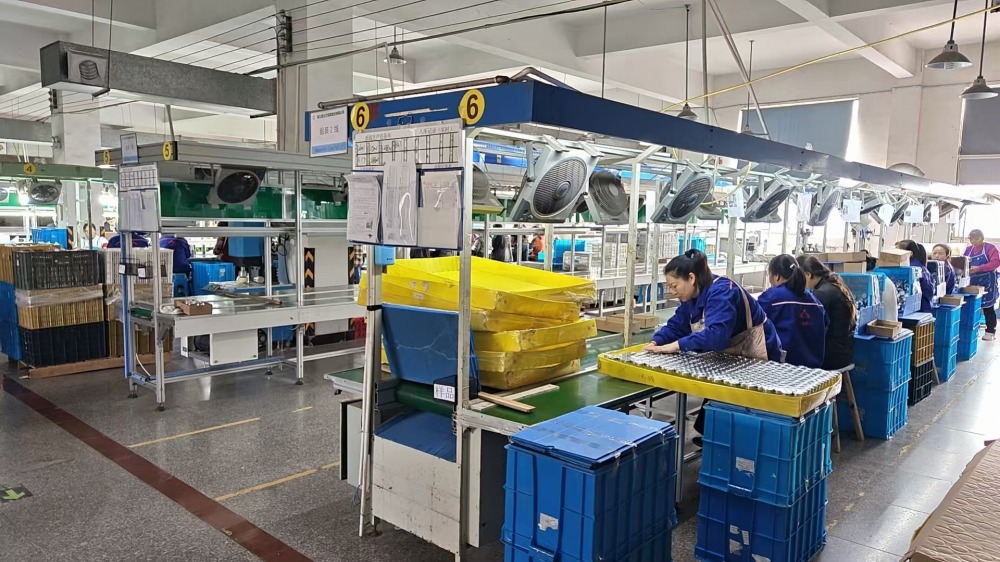
Operates 10 in-house production lines covering raw material inspection, injection molding, metal cutting, laser cutting, hydraulic bulging, polishing, and automated assembly.
Verified Quality Assurance
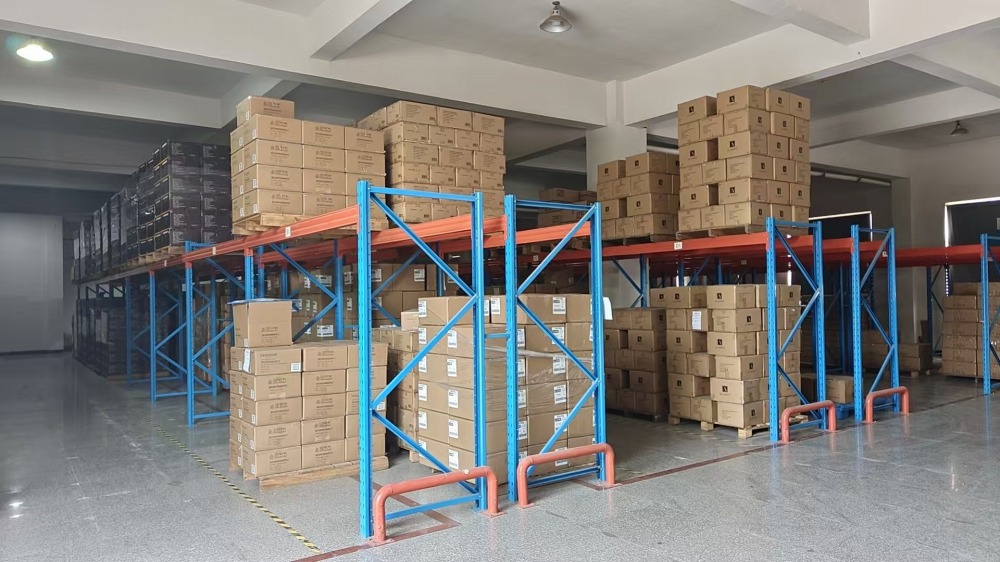
Intertek on-site audited 12,538 m² infrastructure with an in-house QC laboratory performing salt spray corrosion, thermal cycling, carton bursting, and voltage endurance tests.
Rapid OEM/ODM Prototyping
Dedicated engineering teams capable of transforming sketches and rapid 3D prints into production tooling, burr calibration, and motor configuration within accelerated turnaround times.
Export Compliance Ready
Full support for international regulatory certifications including CB Scheme, CE, RoHS, LFGB, and FDA food-contact standards, backed by a 21-year verified international trade history.