Intertek Verified Manufacturer · 23 Years OEM/ODM

China Top Manual Espresso Maker Manufacturers & Supplier

Precision Engineering, CNC Stainless Burr Tolerances, High-Pressure Fluidic Extraction Systems & Direct Factory Supply Chains for Global Coffee Brands

23+
Years Industry Expertise
12,538 m²
In-House Manufacturing Area
264
Skilled Technical Staff
10 Lines
Vertical Assembly & Metal Forming
9–16 Bar
True Extraction Range Tested

Recommended High-Performance Manual Grinding & Extraction Equipment

Streamlined for specialty beverage brands, wholesale importers, and private-label roasting programs requiring repeatable particle uniformity and commercial-grade pressure stability.

Industry Sourcing Architecture: The Engineering Behind Manual Espresso Makers

In global specialty coffee manufacturing, the term Manual Espresso Maker spans two closely coupled mechanical disciplines: lever/piston pneumatic fluidic extraction machines and the high-precision manual conical burr grinders calibrated specifically to feed true espresso-range particle distributions (typically between 180 µm and 350 µm with narrow fines dispersion). When overseas brands evaluate an OEM partner in China, the distinction between decorative novelty kitchenware and an authentic espresso extraction system lies entirely in fluidic tolerance, mechanical rigidity, and thermodynamic retention.

True manual espresso extraction mandates sustaining an interior hydraulic chamber pressure of 9 to 12 bars (0.9 to 1.2 MPa) across an extraction window of 25 to 35 seconds. Achieving this without electrical heating elements or automated motor pumps places tremendous axial and radial mechanical stresses on the cylinder wall, lever linkage pins, and internal silicone/fluoroelastomer (FKM) piston gaskets. At Zhejiang BMDEV Plastic Industry Co., Ltd., our engineering facility integrates hydraulic bulging, high-precision metal stamping, and specialized multi-cavity injection tooling to manufacture components that withstand cyclical fluid pressure surges exceeding 16 bars without structural fatigue or pressure drop-off.

"The core differentiator in OEM manual coffee hardware is dimensional repeatability. A variance of just 0.05 mm in the inner bore diameter of an espresso pressure chamber will cause micro-channeling, pressure leaks, and temperature collapse during pre-infusion. Our factory controls inner cylinder tolerances within ±0.015 mm through CNC internal turning and mirror-grade hydraulic polishing."

Furthermore, without ultra-consistent grinding, manual espresso brewing fails completely due to uneven bed resistance. By cross-leveraging our 23 years of tooling experience across high-torque electric grinders and manual hand mills, we optimize both the brewing device and its partner grinder. This systems-level approach ensures that commercial buyers receive complementary product lines that guarantee uniform extraction, rich golden crema, and long mechanical lifespans in demanding retail, camping, and specialty café environments.

Manual Espresso Maker Procurement & Technology Trends

Strategic market analysis for category buyers, commercial distributors, and OEM brands planning 2025–2028 product roadmaps.

Pressure Profiling & Live Gauging

B2B buyers are transitioning away from unmetered manual lever units toward systems equipped with built-in or modular glycerine-damped pressure gauges. End consumers demand visual confirmation of pre-infusion (1.5–3 bar) transitioning to peak extraction (9 bar) and tapering decay.

Thermal Mass & Pre-Heat Reduction

Traditional steel manual heads suffer excessive heat loss during initial water contact. Emerging technical solutions integrate aerospace-grade anodized aluminum alloy liners or high-temperature thin-wall engineered composites (PPS/PEEK) that minimize pre-heat warm-up cycles.

Modular 51mm/58mm Portafilter Compatibility

Modern consumers expect cross-compatibility with commercial barista tools. Supply procurement is shifting strictly to models accepting standard 51 mm or commercial 58 mm bottomless portafilters, IMS shower screens, and standardized puck screens, expanding aftermarket accessory margins.

Why Partner with Zhejiang BMDEV Plastic Industry Co., Ltd.

Direct manufacturer capabilities verified on-site by Intertek. Operating out of Tongqin Town, Jinhua, Zhejiang, we handle every stage from raw resin and billet machining to export assembly.

Engineering & Technical Support

In-house industrial design and rapid 3D prototyping. We translate CAD sketches and client samples into production-ready injection molds, laser fixtures, and pressure seals in under 25 business days.

Massive Scale Manufacturing

Spanning 12,538 m² of physical factory floor with 264 verified employees. Ten synchronized assembly lines ensure high output, reliable fulfillment schedules, and flexible volume surges for global retailers.

Verified Product Quality

Intertek on-site verified plant holding comprehensive CB, CE, RoHS, and food-contact compliance certifications. Every production batch undergoes multi-stage hydraulic and drop-stress testing.

Comprehensive OEM/ODM Service

Dedicated English-speaking technical sales reps. Complete assistance with custom laser logo engraving, luxury gift-box packaging, custom color anodization, and international door-to-door logistics.

BMDEV Main Factory Building Facility in Jinhua
Main Facility (12,538 m²)

Fully certified manufacturing campus in Fenghuangshan Industrial Zone, Tongqin Town.

In-House Plastic Injection Molding Machinery
Precision Injection Molding

Automated molding equipment ensuring flawless body housings, gaskets, and burr rings.
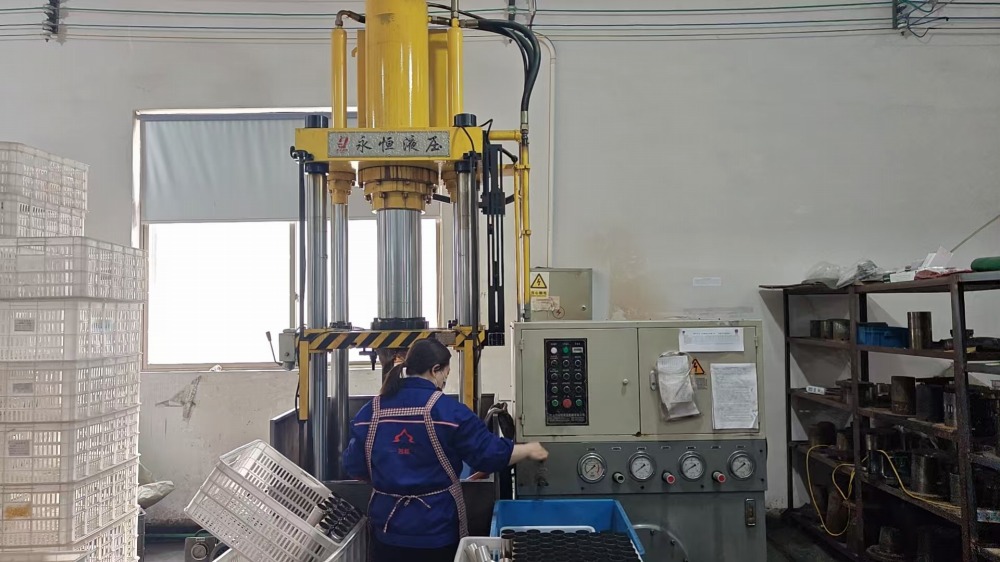
Hydraulic Bulging Line for Metal Pressure Bodies
Hydraulic Bulging Line

Specialized hydraulic forming producing seamless stainless steel and aluminum chambers.
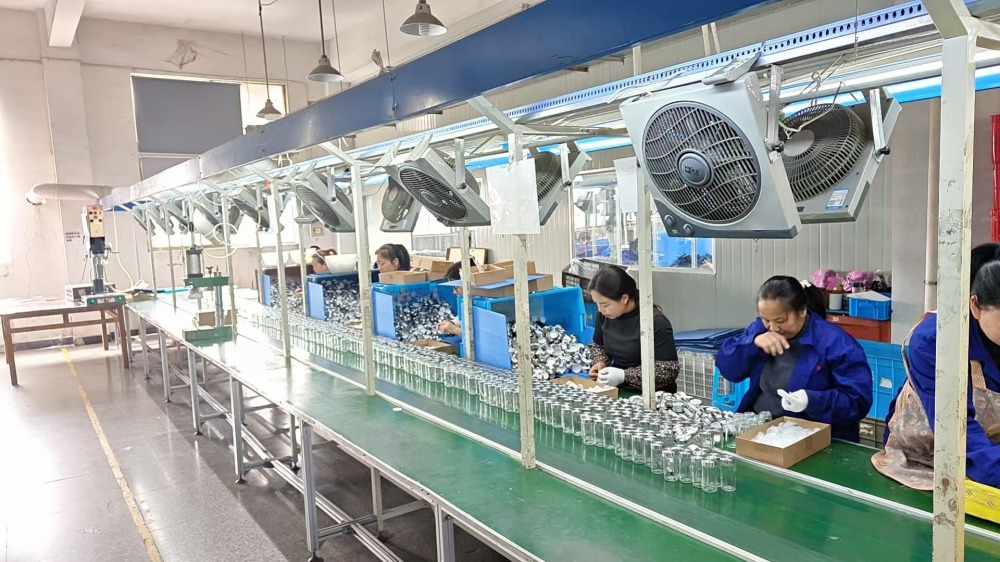
Manual Espresso Maker and Grinder Assembly Line
Dedicated Assembly Lines

10 streamlined lines operating strict inline defect screening and barometric calibration.

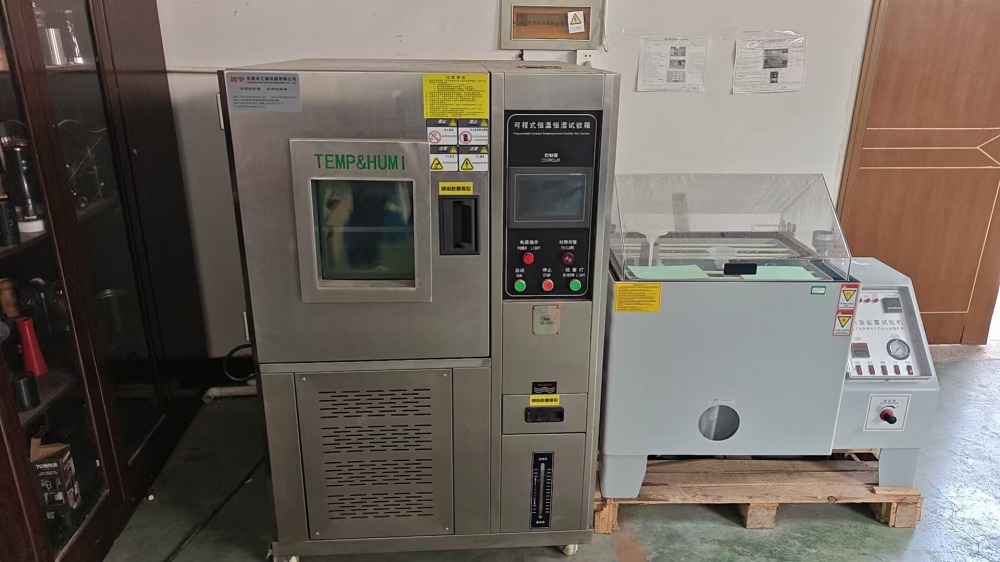
In-House Laboratory & Stress Testing Infrastructure

Manual brewing and grinding equipment must endure repeated thermal expansion, corrosive salt/mineral water contact, and drop impacts. Every batch passes strict protocol checks before export packaging.

Salt Spray Corrosion Chamber
Salt Spray Chamber (Corrosion Testing)
Programmable Temperature and Humidity Aging Chamber
Thermal & Humidity Environmental Aging
Rechargeable Battery Life & Load Analyzer
Battery Analyzer (Cycle & Current Safety)
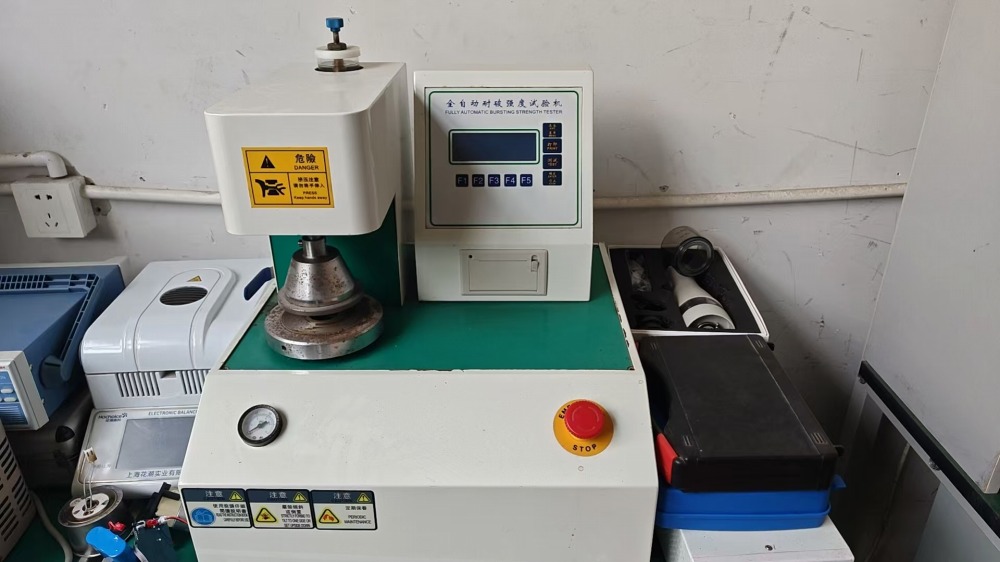
Export Carton Bursting Strength Testing Machine
Bursting Strength Tester (Drop & Transit)
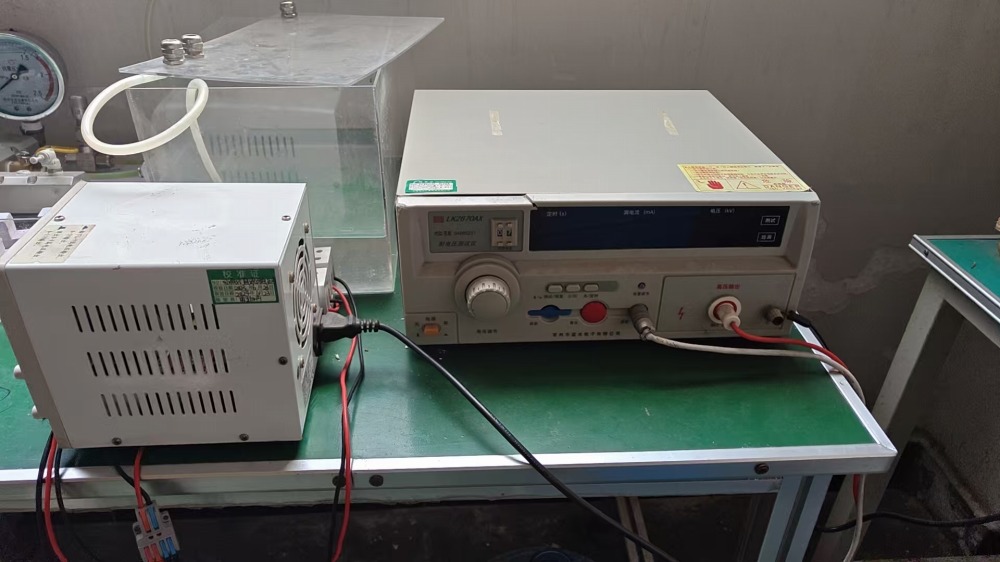
High Voltage Safety and Electrical Endurance Tester
Voltage & Pressure Endurance Rig

Frequently Asked Questions: Manual Espresso Maker Sourcing

Clear, direct procurement answers for coffee equipment distributors, e-commerce brands, and global OEM sourcing agents.

What is the minimum order quantity (MOQ) for custom-branded manual coffee & grinder products?
Our MOQ structure depends on the depth of customization. Standard off-the-shelf sampling starts from 2 to 10 pieces to facilitate technical evaluation and pressure testing. For basic custom branding (custom laser logo engraving and standard custom graphic packaging), the MOQ typically ranges between 500 and 1,000 pieces. Complete bespoke OEM/ODM projects (custom chamber geometry, tailored lever mechanics, and custom tooling) start at 2,000 pieces.
How do you verify pressure safety and prevent catastrophic pressure release in lever-actuated makers?
Every manual extraction chamber engineered in our facility undergoes rigorous hydrostatic proof pressure testing. While manual espresso is typically extracted between 9 and 12 bars, our internal burst-pressure safety threshold is rated at a minimum of 18 to 22 bars. Furthermore, our designs feature integrated over-pressure bypass safety channels in the piston head, ensuring that if a user over-packs or chokes the basket with excessively fine coffee grind, surplus pressure bleeds harmlessly inward rather than causing seal rupture.
Which burr materials are recommended for pairing with manual espresso devices: Ceramic or CNC Stainless Steel?
For true espresso brewing, CNC machined 420 or 440 high-nitrogen stainless steel conical burrs (hardness ratings 55–58 HRC) are strongly recommended. Steel burrs cut bean cellular walls cleanly, creating a tight bimodal particle size curve with controlled fines, providing the uniform flow resistance essential for 9-bar extraction. Ceramic burrs crush rather than cut; while ceramic burrs are cost-effective, corrosion-proof, and superb for coarse filter coffee, French press, and spice/salt grinding, they produce excessive ultra-fines that can clog espresso shower screens. We offer both options based on your targeted retail price point.
Do your materials comply with international food-contact safety standards (FDA, LFGB, RoHS)?
Yes. All raw materials that touch boiling water or coffee grounds—including food-grade 304/316 stainless steel, high-borosilicate glass, platinum-cured silicone, and BPA-free polymers (Tritan, POM, PTFE)—comply fully with European LFGB regulations and United States FDA 21 CFR standards. All electrical models comply with CE, CB Scheme, and RoHS safety directives. Independent third-party chemical migration test certificates are provided per shipment.
Can prospective overseas clients inspect or audit the BMDEV production facility in Zhejiang?
Absolutely. Our production facility at No. 68 Fenghuang Avenue, Tongqin Town, Jinhua, Zhejiang has been verified and audited on-site by Intertek. Importers and third-party inspection firms (e.g., SGS, Bureau Veritas, TÜV) are welcomed to schedule on-site factory audits. Alternatively, our sales engineering staff can host high-definition video walkthroughs covering our metal punching lines, injection workshop, CNC cells, and testing lab.

Launch Your Custom Manual Espresso Equipment Line

Connect directly with our senior engineering and trade team. We will review your target specifications, provide rapid sample pricing, and calculate freight and tooling schedules for your market.