A Stainless Steel Pepper Mill is a grinder designed to crack peppercorns with a hand crank or motor. Its metal body gives it a solid feel and a clean, modern appearance. Turn the knob, and pepper falls freshly ground onto soup, eggs, or a cutting board. Simple enough.
The phrase describes the exterior, not necessarily every working part. Inside, the grinding mechanism may use stainless steel or ceramic, and the materials affect durability and performance. A good mill should offer a consistent grind, a secure adjustment setting, and a chamber that is easy to refill. Fine pepper suits dressings; a coarse grind adds texture to roasted vegetables. Small details matter.
For transparency, the following is an editorially created quote from fictional pepper-mill design specialist Elena Ward: “A mill earns its place through a steady grind, a comfortable grip, and parts that are easy to maintain.” That is a useful test, though no single design fits every kitchen. Some stainless-steel finishes show fingerprints, and a metal exterior does not make a mill immune to wear or corrosion. Check the grinding mechanism and care instructions before buying. Wipe the body with a soft cloth, and keep the interior dry. A little attention helps. This guide explores how these mills work, what their materials mean, and which features deserve a closer look.
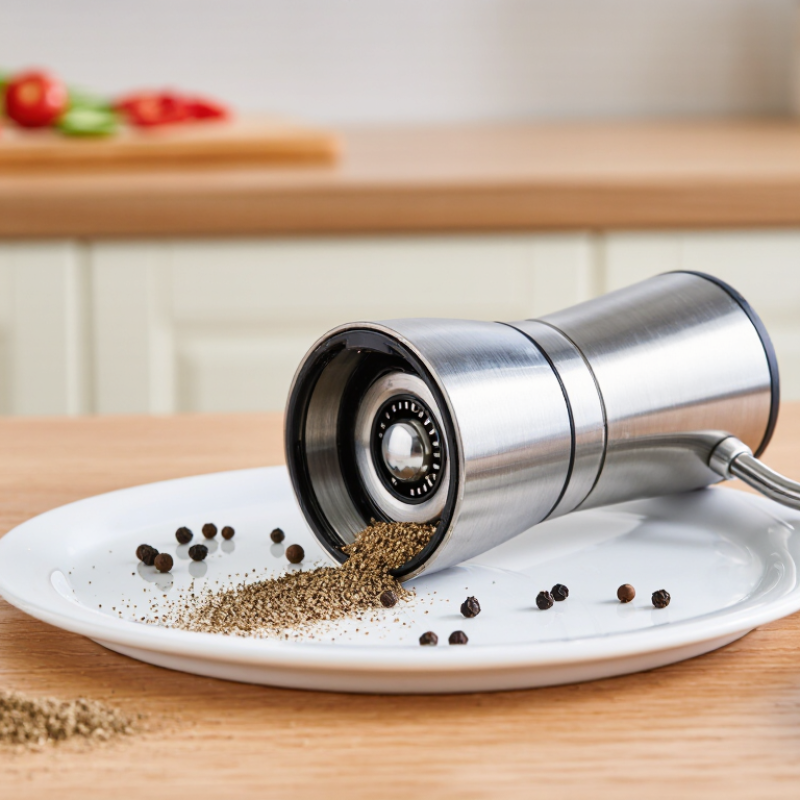
A stainless steel pepper mill is a refillable tool that cracks whole peppercorns as you turn its top or handle. Its stainless steel body resists everyday moisture and wear, though it is not completely immune to scratches or corrosion. Inside, a grinding mechanism—often made from hardened steel or ceramic—breaks the peppercorns into smaller pieces. The outer shell and grinder do different jobs.
A steady grip helps you grind without the mill slipping, especially when your hands are damp. Many models let you adjust the grind, from fine grains for soups to coarse pieces for a steak crust.
Small, but useful.
A clear adjustment setting is helpful, but the mechanism can feel stiff or loose on some mills. Turn it a few times before cooking to check the result.
Wipe the body with a soft cloth, and keep the inside dry when refilling. Stainless steel gives a durable, clean-looking finish, but the grinding mechanism and ease of use matter just as much.
A stainless steel pepper mill is more than a metal shell. Its body may be brushed or polished stainless steel, chosen for strength and resistance to everyday moisture. The finish affects handling, too. A brushed surface can hide fingerprints better, while a polished one shows them quickly. Small detail.
Inside, a central shaft carries the turning force from the top to the grinding mechanism. The mechanism may use hardened steel or ceramic parts; the material varies by design. Steel burrs can give a crisp, consistent grind, while ceramic parts resist corrosion. Neither choice makes every mill equally durable. Alignment and fit matter just as much.
The top cap often holds the peppercorns in place, and a knob or screw adjusts grind size. A tighter setting usually produces finer particles, though adjustment may feel less precise on a basic mill. Look for smooth turning and a stable base. These are practical signs, not guarantees. One trade-off is easy to miss: a metal body can feel solid, but it may also be slippery with damp hands. The mill should suit the way it is actually used.
What Is a Stainless Steel Pepper Mill?
How the Pepper Grinding Mechanism Works
A stainless steel pepper mill has a metal exterior, but its housing does not reveal the mechanism. The grinding parts may also be steel, though designs vary. This distinction matters: the mechanism, not the finish, determines how peppercorns break and how evenly they grind.
Inside, whole peppercorns sit in a chamber above a pair of burrs. Turning the top knob or crank rotates a central shaft and one burr, while the other stays fixed. Peppercorns pass between their ridged surfaces, where they crack into smaller pieces. The gap controls particle size: a narrower setting usually produces finer pepper, while a wider gap leaves larger flakes. Turn slowly. It helps.
Many mills have an adjustment screw underneath or a collar near the top; the control varies by design. A loose setting can produce uneven pieces, while burrs set too tightly may bind. Damp peppercorns can also cause trouble. Keep the chamber dry, and brush out old fragments now and then. If the grind feels rough, check the setting before assuming the burrs are worn. Stainless steel can resist corrosion, but it does not make every internal part stainless or maintenance-free. Some mills are less consistent than their smooth exterior suggests. That is worth remembering.
A pepper mill uses a rotating mechanism to crack peppercorns and release ground pepper. This chart shows the main steps in their path through a typical mill, in order.
The numbers indicate process order, not measured time or grinding performance. Turning the handle drives the burr mechanism; adjusting the burr gap changes the grind size.
A stainless steel pepper mill has a stainless-finished body and a mechanism that cracks whole peppercorns. Some mills use steel burrs; others use ceramic. Check the product details, since the outer shell does not identify the grinding material. In everyday cooking, freshly ground pepper works well on eggs, salads, roasted vegetables, soups, and meat. A little goes far. The aroma is strongest just after grinding, especially over warm food.
Most mills adjust through a knob or dial near the grinding mechanism. On many models, tightening the top knob produces a finer grind, while loosening it makes the particles coarser. Designs differ, so follow the mill’s instructions rather than forcing a stiff adjustment. Turn the setting in small steps, then grind a pinch onto a plate to check the result. Coarse pepper adds visible crunch to a salad or steak; finer pepper blends more evenly into sauces and soups. The first setting may not suit every dish.
Peppercorns can lodge in the mechanism, particularly when a mill is packed too full. Fill it below the rim and turn the mill steadily instead of squeezing it hard. For a consistent result, adjust the setting before grinding, since changing it mid-turn can feel awkward. Wipe the exterior with a dry cloth. Keep it dry. Moisture can cause pepper to clump and may affect internal parts, even when the outer body is stainless steel.
A stainless steel pepper mill is built for repeated use, but its finish still needs care. After grinding, wipe the outside with a soft, slightly damp cloth to remove fingerprints and pepper dust. Dry it promptly. Avoid steel wool and harsh scouring pads; they can leave fine scratches that catch grime. For sticky residue, use a little mild dish soap, then wipe with clean water and dry thoroughly. Keep the mill away from the sink when possible. Stainless steel resists corrosion, but it is not immune to prolonged moisture or salty residue.
Clean the grinding area according to the mill’s design, since mechanisms can differ. Many should not be rinsed under running water: trapped moisture may affect the grinder or leave pepper clumps. Instead, empty remaining pepper and brush out loose particles with a small, dry brush. Refill only when the chamber is dry, and turn the grinder gently rather than forcing a jam. Small habits matter. It is easy to assume a metal body means the whole mill is waterproof, but that can be a costly mistake. Check for loose parts and uneven grinding now and then; a little wear is normal, and replacement parts may not always be available.
It cracks whole peppercorns as you turn a knob or handle. The metal body is only the outer shell.
It resists everyday moisture and wear, but it is not immune to corrosion or scratches. Dry it after wiping.
The burrs may be made from hardened steel or ceramic. Fit and alignment matter as much as material.
A screw or collar changes the gap between the burrs. A narrower gap usually makes finer pepper.
Turn the mill a few times before cooking and inspect the pepper. Settings can feel stiff or loose.
The setting may be loose, or the burrs may be too tight. Check the adjustment before assuming the parts are worn.
Keep the inside dry and brush out old pepper fragments occasionally. Damp peppercorns can cause trouble.
Not necessarily. A brushed surface can hide fingerprints, while a polished one shows them quickly. Small detail.
A Stainless Steel Pepper Mill is a kitchen tool designed to crush whole peppercorns into freshly ground seasoning. Its body is commonly made from stainless steel, while other parts may include a grinding core, a turning knob, and a compartment that holds the peppercorns. The combination of sturdy materials and a simple design makes the mill practical for everyday cooking and serving.
Turning the mill moves the grinding mechanism, breaking peppercorns into smaller pieces. Many models let users adjust the grind, from coarse to fine, to suit different dishes and preferences. A Stainless Steel Pepper Mill can be used at the table or while preparing meals, adding pepper as needed. To keep it working well, wipe the exterior with a soft cloth, keep the grinding area dry, and refill it when necessary. With basic care, its durable construction can support regular use over time.