Choosing a Ceramic Burr Coffee Grinder in 2026 means looking beyond the word “ceramic.” A burr’s material matters, but so do its shape, alignment, adjustment range, and fit with your brewing routine. A grinder should produce grounds suited to your method, whether you use a pour-over cone, French press, or espresso machine. It should also feel practical on an ordinary morning, not just impressive in a product photo.
Coffee consultant and author Scott Rao emphasizes grind consistency as a foundation for even extraction. His advice is often summarized this way: “Consistent grounds support consistent extraction.” Treat that as a useful principle, not a promise that any ceramic burr will deliver perfect coffee. Compare grind samples when possible. Look for a stable adjustment mechanism, clear cleaning instructions, and replacement-part support. Listen, too. A hand grinder’s quiet turns may suit a small kitchen, while an electric model can save time before work.
Ceramic burrs resist corrosion and can last well with proper care, but they are not automatically sharper or better than steel. The right choice depends on your budget, brewing method, and tolerance for slower grinding. This guide weighs those trade-offs and explains what specifications can—and cannot—tell you. One honest limitation: grinder tests rarely reproduce every home kitchen. Real results can vary with beans, roast, and technique.
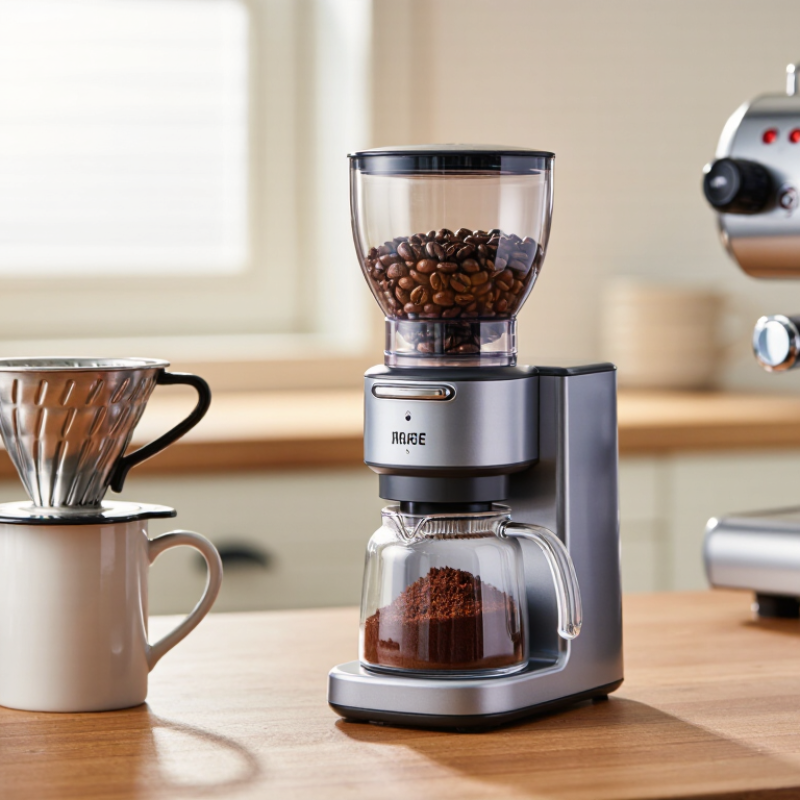
Start with your brew method, not the grinder’s settings count. Pour-over usually needs a medium grind, while espresso calls for a much finer setting. French press works better with coarse, even particles. Your goal is a cup with balanced sweetness, acidity, and bitterness. The often-cited SCA extraction-yield range is 18–22%. Treat it as a useful reference, not a promise that every coffee will taste best at the same number.
A ceramic burr grinder can offer steady grinding, but the burr material alone cannot ensure consistency. Check whether adjustments are easy to repeat, especially if you switch between brew methods. Use the same coffee dose, water temperature, and brew time while testing one grind change at a time.
A finer grind often increases extraction, but too fine may bring harsh flavors or slow a pour-over. Taste matters. If you have a refractometer, it can help estimate extraction yield; without one, note the cup’s flavor and brewing time. A number may look precise while the cup still tastes uneven.
Tips: Keep a small brew log with grind setting, dose, and brew time. Change one variable at a time. I sometimes want to adjust everything at once, but that makes the result harder to understand.
Ceramic burr shape affects how beans are cut, but shape alone cannot predict cup quality. Conical burrs often suit compact hand grinders and produce a useful range for pour-over, drip, and immersion brewing. Flat burrs can offer a more uniform particle profile, though alignment and tooth design matter just as much. Not always.
Burr diameter influences grinding speed and how much coffee the grinder can handle comfortably. A larger set may feel quicker, but it does not guarantee better flavor. Check the stated grind range and the number of adjustment steps. Espresso needs small, controlled changes; French press needs a coarse setting without too many fine particles. For one grinder serving several brew methods, look for clear, repeatable adjustments across that range. That matters.
Also consider whether the settings are stepped or continuous. Stepped settings are easier to return to, while continuous adjustment allows finer tuning but can be harder to track. I would not choose the widest range by default; some settings may be impractical with a particular burr design. If possible, compare grind samples at the same brew setting, then check whether the adjustment mechanism stays secure. Ceramic can resist wear, yet it may chip if dropped or struck. A careful fit and sensible handling count.
The SCA Brewing Control Chart compares brew strength with extraction yield. It can help you check whether a grinder setting produces repeatable cups, but it cannot measure particle size directly. A chart point inside the preferred zone is useful evidence, not proof that a grinder is consistent.
Keep the recipe steady: use the same beans, dose, water temperature, and brewing method. Grind at one setting, brew several cups, then measure each cup’s total dissolved solids with a suitable meter. Plot the readings on the chart. Points that cluster closely suggest reliable results; scattered points may reflect grind variation, uneven pouring, or measurement error. Ceramic burrs alone do not guarantee consistency. Check adjustment steps, burr alignment, and whether the setting shifts during use. Even careful testing has flaws.
Tips: Use fresh beans and clean equipment. Repeat the test on another day. The chart shows the brew outcome, not the cause, so change one variable at a time. If readings vary, inspect your technique before blaming the grinder.
Choosing a ceramic burr grinder means checking more than its advertised settings. Turn the adjustment collar and note whether each click produces a repeatable change. Very wide steps can make dialing in espresso frustrating; loose markings can make yesterday’s setting hard to find. The Specialty Coffee Association’s brewing standards place a common extraction-yield target at 18–22%. That range is a useful reference, not a promise that one grind setting suits every bean. Small details matter. Try the grinder with your usual brew method, and check whether grounds look consistent rather than merely fine.
Retention is easy to overlook. Weigh a small dose before grinding, then weigh the grounds collected; the difference reveals what stayed inside. Repeat the test, since static and bean oils can change results. Capacity should match your routine: a large hopper may be convenient, but grinding only what you need can keep coffee fresher. For cleaning, check the maker’s instructions before using water or taking the burrs apart. Brush away dry residue and inspect the chute, where grounds can collect. I would not assume ceramic burrs make upkeep effortless. They still need care. A slightly awkward cleaning process may matter more than a long list of settings.
| Evaluation Dimension | What to Check | Practical Benchmark | Why It Matters |
|---|---|---|---|
| Adjustment precision | Check whether the adjustment mechanism has clear, repeatable steps and stays in place while grinding. | Finer, clearly defined steps make small changes easier. Click counts are not directly comparable between different grinder designs. | Repeatable settings help when dialing in espresso or switching between brewing methods. |
| Grind range | Confirm the grinder can produce a consistent grind for the brewing methods you use. | Coarse settings suit methods such as French press; medium settings suit many pour-over brews; fine settings are needed for espresso-style brewing. | A wide adjustment range is useful only if the burrs can also produce a suitably consistent grind at those settings. |
| Grounds retention | Look for a short, uncomplicated path from the burrs to the grounds container. Check for coffee trapped after grinding. | Retention varies with the grinder, roast, grind setting, humidity, and handling; compare it by weighing the dose before and after grinding. | Lower retention reduces leftover grounds and makes single-dose weighing more predictable. |
| Bean capacity | Compare the hopper or dosing chamber capacity with the amount you usually brew. | Many hand grinders hold roughly 20–40 g of beans; capacity differs by model and should be checked against the stated specification. | A larger chamber can reduce refilling for multi-cup brewing, while a smaller one may suit single-dose use. |
| Cleaning access | Check whether the burr assembly can be opened without tools and whether parts can be reassembled correctly. | A removable handle, grounds container, and accessible burr chamber make routine brushing easier. | Regular dry brushing removes old grounds and helps limit stale-coffee flavors; ceramic burrs should be handled carefully to avoid chips. |
| Build stability | Inspect the burr alignment, shaft support, handle connection, and body for wobble or looseness. | A stable shaft and secure adjustment mechanism are more useful than a high adjustment-step count on its own. | Excess movement can make grind results less consistent and make adjustment settings harder to repeat. |
| Grinding effort | Consider handle length, grip comfort, and the effort needed at your preferred grind setting. | Finer settings and harder beans generally require more effort in a manual grinder. | Comfort matters if you grind daily, prepare several servings, or use a fine setting. |
| Overall fit | Match the adjustment range, capacity, portability, and cleaning routine to your regular brewing habits. | Prioritize repeatable settings for espresso-style brewing, adequate capacity for multiple cups, and easy disassembly for frequent cleaning. | The best choice is the one that fits your brewing routine rather than a single specification in isolation. |
Benchmarks are general buying guidance, not specifications for a particular grinder. Verify capacity and adjustment details with the product documentation, and compare retention under the same grinding conditions.
When choosing a ceramic-burr grinder, judge it by the cup, not its material alone. Check whether its settings produce a repeatable grind for your brewing method. Look for clear adjustment steps, low grounds retention, and burrs that are easy to clean. These details matter when you change from a coarse French press setting to a finer pour-over setting.
SCA’s Brewing Control Chart places brewed coffee’s target TDS at 1.15–1.35%, alongside an extraction-yield range of 18–22%. TDS measures coffee strength, not flavor quality. A reading inside the range can still taste bitter, thin, or dull.
Use a calibrated coffee refractometer and stir the brew before taking a sample. Let it cool, since hot samples can distort readings. Keep dose, water, and brew method consistent while testing grind settings; change one variable at a time.
If TDS reads 1.10%, a finer grind may increase extraction, but it can also add bitterness. Taste still matters. Record each reading with a brief note, such as “1.24%, sweet, slight dryness.”
Ceramic burrs do not guarantee a better cup, and a target number is not a verdict. I would question any grinder that reaches the range once but cannot repeat it. Real brewing is less tidy than a chart.
Pour-over usually needs a medium grind. Espresso needs finer grounds, while French press works better with coarse, even particles.
A common target is 18–22%. It is not a promise that every coffee will taste best there. Taste decides.
No. Check whether adjustment steps are repeatable and whether the grounds look even. The material alone cannot ensure consistency.
Keep the dose, water temperature, and brew time steady. Change one setting at a time. Keep a small log.
Weigh a small dose before grinding, then weigh the collected grounds. Repeat the test; static and bean oils can affect results.
TDS estimates coffee strength, not flavor quality. A common reference range is 1.15–1.35%. A number can still mislead.
If it reads 1.10%, try a finer grind. That may increase extraction, but it can also bring bitterness.
Follow its care instructions. Brush away dry residue and inspect the chute. Grounds hide there.
Match capacity to your routine. A large hopper is convenient, but grinding only what you need may help keep coffee fresh. I still find this easy to overlook.
Choosing a Ceramic Burr Coffee Grinder in 2026 starts with the way you brew. Espresso, pour-over, and immersion methods need different grind sizes, so match the grinder’s adjustment range to your preferred recipes. Consider burr shape and size alongside how easily you can make small, repeatable adjustments. A useful grinder should produce grounds that are consistent enough for your brewing method, with manageable retention, suitable capacity, and parts that are straightforward to clean.
Judge performance by the coffee in your cup, not specifications alone. Use the SCA Brewing Control Chart as a guide to assess extraction, aiming for the commonly cited 18–22% extraction yield. Measure brewed coffee’s total dissolved solids, or TDS, and compare the result with the 1.15–1.35% reference range. Together, grind consistency, practical maintenance, and repeatable brew results can help you choose a grinder that fits your routine.