0%

Choosing a Manual Salt and Pepper Grinder in 2026 is less about finding the most polished finish and more about matching the grinder to your cooking habits. Samin Nosrat, chef and author of Salt, Fat, Acid, Heat, writes, “Salt has a bigger impact on flavor than any other ingredient.” That makes control important: a dependable grinder should let you season a simmering pot with a fine, even turn, then add a coarser crack over roasted vegetables. The right choice also depends on what you grind. Salt and pepper can require different mechanisms, so check the manufacturer’s instructions before using one grinder for both.

Look closely at the adjustment mechanism, burr material, grip, capacity, and ease of refilling. Turn the handle slowly; it should feel steady, not gritty or loose. Consider whether the grind setting stays in place and whether the container is easy to clean. Details matter. A compact mill may fit neatly beside the stove, but a narrow opening can make refilling fiddly. A large hopper means fewer refills, though it may feel awkward in smaller hands. No grinder is perfect. Even a sturdy model can leave stray peppercorns on the counter, and a beautiful finish does not guarantee comfortable daily use. This guide explains how to compare practical features, spot trade-offs, and choose a Manual Salt and Pepper Grinder that suits your kitchen—not just the product photos.
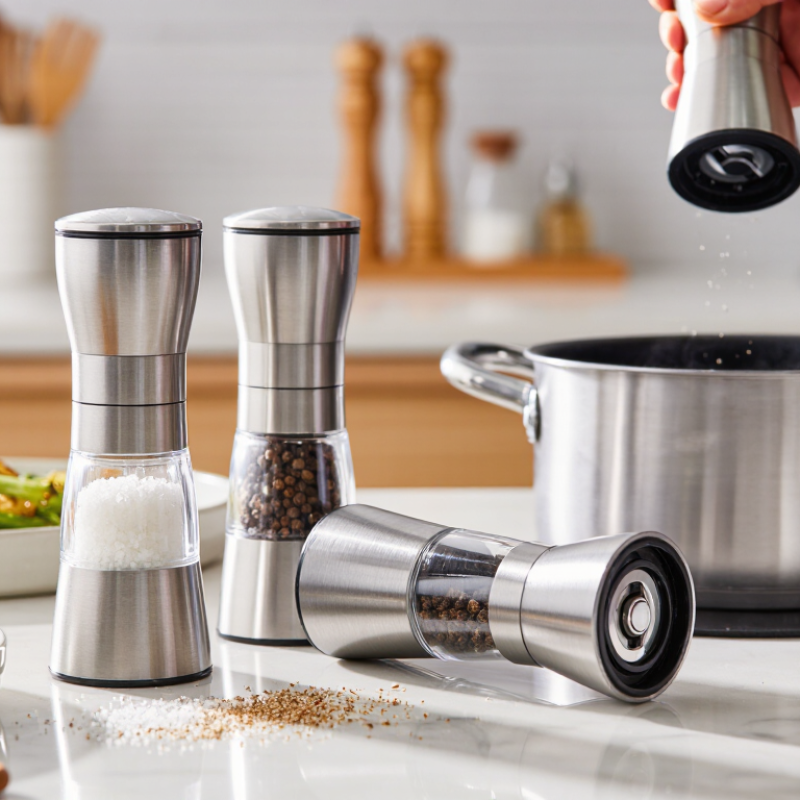
How to Choose a Manual Salt and Pepper Grinder in 2026

Identify Your Salt, Pepper, and Grinding Needs

Before choosing a manual grinder, identify the salt you actually use. Dry, hard crystals are usually the safest choice; damp salt can clump and block the mechanism. Check the grinder’s stated crystal-size range, since oversized pieces may jam. A few grains on a plate tell you more than a label does. Flaky finishing salt may be better sprinkled by hand.

Peppercorns are simpler, but your preferred texture matters. For soups and marinades, a fine, even grind helps the flavor spread. For steak or roasted vegetables, a coarse crack adds crunch. Try the adjustment while turning the handle; some settings shift too easily. Small detail, big difference. If your hands tire quickly, choose a handle that feels steady and turns without a tight grip. A large chamber means fewer refills, but it can feel heavy.

Think about where and how often you grind. A compact model suits occasional table use; frequent cooking may call for a larger capacity and an easy refill opening. Salt and pepper may need different mechanisms, so check that each is suitable for its contents. Keep both dry, and avoid washing a grinder unless its care instructions allow it. Honestly, matching capacity to real habits is easy to overlook. A grinder that looks elegant but stays in the cupboard is the wrong fit.

Compare Manual Grinder Mechanisms and Materials

A manual grinder’s mechanism determines how evenly it works and how much effort each turn takes. Ceramic burrs resist corrosion and suit salt, while many carbon-steel burrs are designed for pepper. Stainless-steel mechanisms can also work well, but check that the maker specifies them for salt. Not every metal is salt-safe. Burr shape matters, too: larger, well-cut teeth tend to crack peppercorns cleanly, while a poor fit may crush them unevenly. That difference shows up in the bowl.

Materials around the mechanism affect grip, weight, and care. Wood feels warm and steady in the hand, but its finish may need occasional attention around kitchen steam. Stainless steel is durable, though it can feel slippery with damp fingers. Clear acrylic lets you see when the chamber is low. Useful, but not essential. Look for a stable base and an adjustment that clicks or turns securely; a loose dial can shift while grinding. Keep the mechanism dry, and wipe the body rather than soaking it.

Think about the crystals you use. Coarse salt and large peppercorns need a chamber and burr sized to feed them smoothly. A grinder that turns easily when empty may feel stubborn when full. Test the adjustment with a small amount, if possible, and check whether fine settings produce dust or a consistent grind. I’d give ease of cleaning more weight than a polished appearance. Still, the right choice depends on your hands and cooking habits; that part is easy to misjudge online.

Evaluate Grind Settings, Capacity, and Ease of Use

Choosing a manual salt and pepper grinder in 2026 starts with the adjustment mechanism. Look for settings that change predictably, from fine grains for soup to coarse pieces for steak. Turn the dial and grind a little over a plate; the result should be visibly different. Very fine matters. So does consistency. If the setting slips while you twist, it may become annoying during everyday cooking.

Capacity affects how often you refill. A compact grinder fits a small table, but may need topping up every few meals. A larger chamber saves time, though it can feel heavy when full. Check whether the opening is wide enough for clean refilling. Small detail. Spilled peppercorns tend to roll farther than expected. For salt, consider a mechanism suited to dry crystals, and store the grinder away from steam to help prevent clumping.

Ease of use shows up in your hands. A broad body or textured grip can help when fingers are damp, while a smooth, steady crank takes less effort than a stiff one. Try adjusting the grind with one hand if you often cook while stirring. I have found that clear windows seem useful, but they do not replace a refill lid that opens easily. A grinder can look perfect on a shelf and still be awkward beside a hot pan.

How to Choose a Manual Salt and Pepper Grinder in 2026 - Evaluate Grind Settings, Capacity, and Ease of Use

Evaluation factor What to look for Practical buying benchmark Why it matters
Grind settings A clearly adjustable mechanism with distinct coarse-to-fine results. Choose multiple repeatable settings, or a smooth adjustment that stays in place during use. Fine grinds suit seasoning and sauces; coarser grinds add texture and are useful for finishing.
Grind consistency Similar particle size across several turns, without frequent jamming or excessive dust. If possible, test a few turns at both a fine and a coarse setting before buying. More even particles make seasoning easier to control and distribute.
Capacity A stated capacity in grams or millilitres, plus a chamber that is easy to refill. A compact grinder needs less counter space; a larger chamber means fewer refills. Compare stated capacity rather than exterior height alone. Chamber capacity varies with grinder design and the size of the peppercorns or salt crystals.
Ease of operation A comfortable grip, smooth turning action, and an adjustment mechanism that is easy to reach. Test with one hand if that is how you plan to use it; avoid designs that require excessive force. A grinder that is comfortable to turn is more practical for regular cooking and for users with limited hand strength.
Grinding mechanism A mechanism specified for the ingredient you intend to grind. Ceramic mechanisms are commonly suitable for salt; for pepper, check that the mechanism is designed to crack peppercorns. Salt can corrode some metals. Follow the maker’s care instructions, especially when using a grinder for salt.
Salt compatibility Clear guidance on suitable salt type and crystal size. Use dry salt crystals within the grinder’s stated size range; avoid damp or wet salt unless the grinder is specifically made for it. Moisture and oversized crystals can clog or damage a mechanism not designed for them.
Refilling and cleaning A wide opening, secure closure, and instructions for cleaning without soaking the mechanism. Prefer a design that can be refilled without a funnel and disassembled only as directed. Easy maintenance reduces spills and helps prevent moisture from remaining inside.
Storage and mess control A stable base or cap that helps keep ground seasoning off the counter. Check whether the grinder rests on its grinding end and whether a fitted cover is included. A cover or non-grinding-end-down design can help reduce residue on shelves and work surfaces.

Note: Capacity and adjustment ranges differ by design. Treat the benchmarks above as comparison criteria and confirm ingredient compatibility and care instructions for the specific grinder.

Check Durability, Cleaning, and Refill Requirements

A manual grinder should feel steady before it looks attractive. Hold it over a plate and turn the knob several times. A loose lid, uneven grind, or gritty pause can signal weak construction. Check the shaft, adjustment ring, and grinder mechanism for wobble. Ceramic mechanisms resist rust, while metal parts may feel sturdier; neither choice guarantees long life. Salt can corrode some metals, so check the product details before using a grinder for salt.

Cleaning should be simple enough to do regularly. Look for a removable top or a clear route for brushing out spice dust. A small, dry brush works well for crumbs around the mechanism. Avoid rinsing the grinder unless its instructions allow it; trapped moisture can clump pepper or damage wood. Wipe the outside with a barely damp cloth, then dry it fully. It’s easy to overlook the inside.

Refill design matters during ordinary cooking. A wide opening means fewer peppercorns bounced across the counter. Check whether the cap lifts off without tools and whether the fill line is easy to see. A transparent chamber helps, but light may fade some spices over time. Small capacity is not always a defect, though frequent refills can become annoying. Consider where you cook and how often you use it. A grinder can still be awkward, even when it is well made.

Choose a Grinder That Fits Your Budget and Kitchen Routine

A grinder should fit the way you cook, not just look good beside the stove. Set a budget before comparing materials, capacity, and adjustment settings. For daily cooking, a sturdy body and a dependable ceramic or steel mechanism may matter more than a polished finish. Check whether the grind can shift easily from fine to coarse. Keep it simple. A low-priced grinder can work well, but a loose adjustment ring or awkward grip may become irritating after a week of use.

Think about where and how often you season food. If you cook at the counter, a compact grinder with a comfortable one-handed grip may suit you. For family meals, a larger chamber means fewer refills, though it can feel bulky in a small kitchen. Look for a lid or covered base if crumbs on the counter bother you. I would not assume that a heavier grinder is automatically better; wet hands can make it harder to handle. That detail is easy to miss.

Compare refill access and cleaning before spending more. A wide opening can make refilling less messy, while a simple exterior is easier to wipe after cooking. If you use pepper daily but salt only occasionally, consider buying two grinders with different capacities rather than matching sizes. It is not a perfect rule. Read the care instructions, too: some mechanisms should stay dry, and washing the whole grinder can damage them. Choose the features you will actually use, then leave room in your budget for the ingredients that go inside.

Manual Salt & Pepper Grinder Budget Guide (2026)

Indicative U.S. retail price ranges for manual grinders. Prices vary by retailer, materials, and set size; these are planning ranges, not a live price survey.

How to use this: A basic grinder can suit occasional use, while an everyday option may be worth considering for frequent cooking. Premium models can offer upgraded materials or adjustment features, but the best choice is the one that fits your routine and budget.

FAQS

What kind of salt works best in a manual grinder?

Dry, hard crystals are usually the safest choice. Damp salt can clump and block the mechanism. Test a few grains first.

How can I choose the right pepper grind?

Fine, even pepper suits soups and marinades. Coarse cracks add texture to steak and roasted vegetables. Try the setting over a plate.

How do I know whether grind settings are reliable?

Turn the adjustment and grind a small amount. The results should look visibly different. A setting that slips can get irritating.

Should I choose a compact or large grinder?

Compact models suit occasional table use and small kitchens. Larger chambers mean fewer refills, but may feel heavy when full. It depends.

What features help make a grinder easier to use?

A steady handle, comfortable grip, and smooth crank can reduce effort. Textured surfaces may help with damp fingers. Try it in your hand.

What should I check before refilling a grinder?

Look for a wide opening that lets crystals or peppercorns pour in cleanly. Spills roll away fast. A lid can help keep the counter tidy.

Can I wash my grinder after cooking?

Check its care instructions before washing. Some mechanisms should stay dry, and steam can cause salt to clump. Wipe the exterior instead when appropriate.

Does a heavier grinder mean better quality?

Not necessarily. A heavy body can feel awkward with wet hands, while a sturdy mechanism may matter more. I might still overlook that detail.

Conclusion

Choosing a Manual Salt and Pepper Grinder in 2026 starts with understanding what you season most often and how you like to cook. Consider whether you need one grinder or a pair, the types of salt and peppercorns you use, and whether you prefer a fine, even grind or a coarser texture. Compare grinding mechanisms and materials for consistency, comfort, and suitability for your kitchen. Adjustable settings can offer flexibility, while capacity affects how often you need to refill.

Before deciding, consider durability, cleaning, and how easily the grinder opens for refilling. A design that is comfortable to hold and simple to maintain is more likely to fit naturally into your daily routine. Balance these practical features with your budget and available counter or storage space. The right choice is not necessarily the most elaborate option; it is a dependable Manual Salt and Pepper Grinder that matches your seasoning habits and is easy to use and care for.

Aveline

Aveline

Aveline is a professional marketing specialist with a deep understanding of the company’s products, their practical applications, and the needs of the customers they serve. She regularly contributes expert articles to the company website, translating product knowledge into clear, useful guidance......