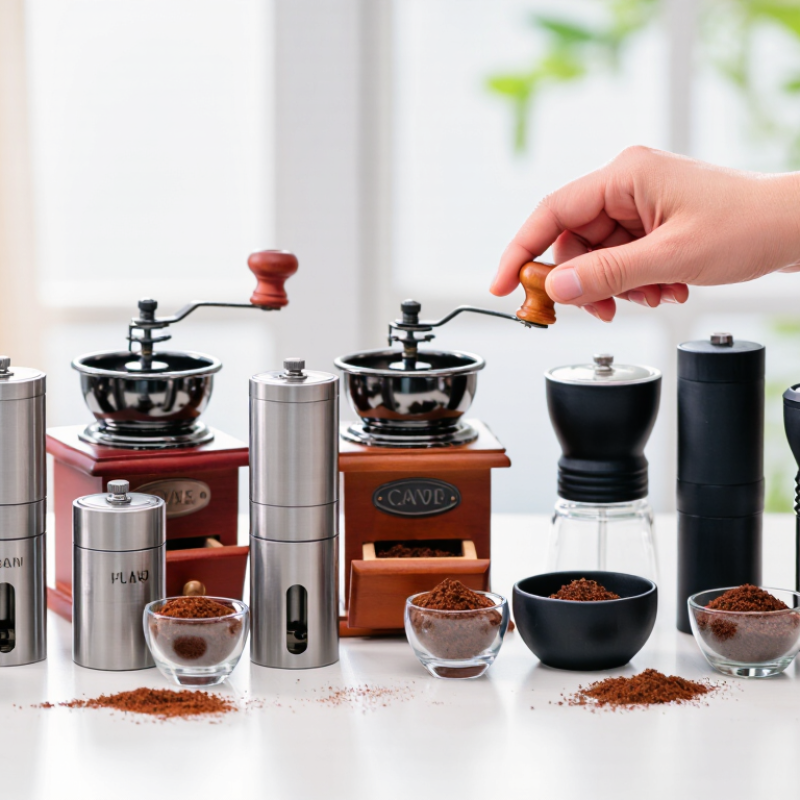
Choosing a Manual Coffee Grinder is about more than appearance or price. Burr shape, adjustment range, handle balance, and alignment affect how evenly beans break apart. A loose axle can make grinding feel rough. A well-fitted burr set can produce a more consistent dose, whether you brew pour-over or French press. Small details matter.
Coffee educator James Hoffmann has emphasized the importance of the grinder in home brewing. His point is practical: grind quality strongly influences what reaches the cup. Buyers comparing China’s manufacturers and suppliers should look beyond polished product photos. Ask about burr materials, machining tolerances, sample testing, replacement parts, and quality checks. Requesting a sample is wise. Specifications can look excellent on paper.
This guide to China’s top 10 Manual Coffee Grinder manufacturers and suppliers is intended to help importers, brands, and coffee businesses make a more informed shortlist. It considers product range, customization, manufacturing capability, and communication—not just advertised capacity or the lowest quotation. Supplier claims still need verification. A factory visit or independent inspection may reveal details that a catalog cannot, though these steps take time and money. No single ranking fits every buyer. The best partner depends on order volume, target market, and the grinder’s intended use. Some trade-offs remain; a compact design, for example, may sacrifice handle leverage. That is worth discussing before placing an order.
Understanding China’s Manual Coffee Grinder Manufacturing Industry
China’s manual coffee grinder manufacturing industry combines metalworking, plastics processing, ceramic production, and precision assembly. Suppliers may source burrs, shafts, adjustment rings, and housings from different workshops, then assemble and inspect the finished grinders. This network can support varied designs, from compact travel models to larger countertop units. Details matter. A burr that turns smoothly by hand may still produce uneven grounds under load, so sample testing should include several grind settings and repeated adjustments.
Production capabilities differ between factories, even when product photos look similar. Buyers can ask how burr alignment is checked, what materials are used for contact parts, and how each unit is inspected before packing. Requesting a sample helps reveal practical issues: a loose adjustment dial, trapped grounds, or a handle that wobbles after repeated use. These are small faults, but they affect daily brewing. Clear specifications and written inspection criteria make supplier discussions more reliable. Still, a sample cannot represent every production batch. That part is easy to overlook. A careful sourcing process should therefore include follow-up checks on consistency, packaging, and replacement-part availability, rather than relying on appearance alone.
China’s Manual Coffee Grinder Manufacturing Industry
Typical Components in a Manual Coffee Grinder
This component-count illustration shows a representative manual grinder architecture: a burr set consists of two burrs, while the other listed parts are single components. Designs vary by model; this is not a supplier ranking or market-share dataset.
Key Factors for Evaluating Chinese Grinder Manufacturers and Suppliers
When evaluating Chinese manual coffee grinder manufacturers and suppliers, inspect more than product photos. Ask for factory videos, production records, and recent quality-control reports. A reliable supplier should explain burr material, shaft alignment, bearing structure, and adjustment accuracy. Request samples from different production batches, not one carefully selected unit. Test each grinder with the same beans, weighing retention, grinding time, and particle consistency. Small differences matter.
Supplier experience also appears in communication. Can the team provide clear drawings, tolerance data, packaging specifications, and replacement-part policies? Confirm minimum order quantities, lead times, payment terms, and inspection procedures before signing an agreement. Check whether the factory can trace materials and record final inspections. A polished showroom proves little. I have seen attractive samples fail during repeated adjustment tests. That weakness should be discussed, not hidden.
Tips: Compare at least three suppliers using identical test standards. Ask for a written corrective-action process when defects appear. Examine the handle, threads, catch cup, and folding mechanism after repeated use. Stainless steel may resist corrosion, but machining quality still controls performance. Certifications should be verified against the actual factory and product. Do not rely only on translated promises. A short video call with the production and quality teams can reveal practical knowledge quickly. Also, leave room for honest uncertainty; early assumptions are often wrong.
Profiles of 10 Leading Manual Coffee Grinder Manufacturers in China
China’s manual coffee grinder sector includes export-focused factories, precision metalworking specialists, and smaller OEM suppliers. A useful profile of ten leading manufacturers should compare more than catalog size. Check burr material, adjustment range, axle stability, sample consistency, and documented production capacity. Ask whether the supplier tests grind uniformity across coarse and fine settings. Request clear photos of burr alignment and the grounds container. Small details matter.
The International Coffee Organization reported world coffee production of about 178 million 60-kilogram bags in crop year 2023/24. This scale supports demand for reliable grinding equipment, but it does not prove that every factory meets the same standard. Supplier profiles should therefore separate verified capabilities from sales claims. Compare machining processes, inspection records, packaging options, and response times. Where available, review independent test results and samples from different production batches. A polished sample can hide uneven quality.
Tips: Ask each shortlisted factory for one sample and a written specification. Test handle resistance, adjustment repeatability, and grounds retention with the same beans. Keep notes. It is easy to overlook the feel of the crank during a quick demonstration.
Comparing Product Features, Customization, and Production Capabilities
China’s Manual Coffee Grinder Suppliers: Comparing Features, Customization, and Capacity
Comparing ten Chinese manufacturers and suppliers means looking beyond catalog photos. Check burr material, adjustment range, and grind consistency across coarse and fine settings. Ask for sample results using the same beans and brewing method. A clear test beats a polished claim. Some listings show stainless-steel burrs, while others use ceramic; neither choice guarantees better performance without checking alignment, durability, and intended use.
Customization can cover handle length, body finish, packaging, logo placement, and private-label components. Request drawings, material specifications, and a physical sample before approving a design. Small changes matter: a loose adjustment ring or slippery grip can frustrate daily use. Not every supplier can alter internal parts, even when exterior options look extensive. Clarify tooling costs, minimum order quantities, and who approves production samples.
Production capability is more than a stated monthly output. Ask how the supplier manages burr alignment, assembly checks, and batch consistency, and request recent inspection records where available. Compare lead times for samples and repeat orders, not just the first quotation. Factory visits or independent audits can add useful evidence, though they do not remove every risk. Details can still be missed. A realistic shortlist balances product performance, customization flexibility, communication, and documented quality controls.
How to Select and Source from a Chinese Coffee Grinder Supplier
China Top 10 Manual Coffee Grinder Manufacturers and Suppliers?
How to Select and Source from a Chinese Coffee Grinder Supplier
A manual grinder can look polished in a product photo, yet performance depends on what sits inside. Ask suppliers for burr material, adjustment range, axle support, and grind consistency data. Request samples from the same production line you plan to order from. Then test them with your own beans. Check whether the handle wobbles, the adjustment ring slips, or fine grounds collect around the burrs. Small defects matter.
Before discussing price, confirm the supplier’s role: factory, trading company, or both. Ask about monthly capacity, inspection steps, packaging options, and lead times during busy periods. A clear answer is useful. So is a written specification. Include dimensions, materials, finish, logo placement, and acceptable tolerances. Verify any quality claims with inspection records or a third-party pre-shipment check. Do not rely on a glossy catalog alone.
Start with a modest trial order if the supplier allows it. Compare sample units across several grind settings, and record the results. Ask how replacement parts are handled; a missing burr or loose screw can become an awkward customer-service problem. Some details may remain uncertain until production begins. That is worth admitting—and planning for.
Conclusion
China’s manual coffee grinder manufacturing industry offers a range of options for businesses seeking reliable products, flexible production, and competitive sourcing. This overview explains how to assess manufacturers and suppliers by considering factors such as material quality, grinding consistency, durability, production capacity, quality control, and communication. It also profiles ten leading manufacturers in the sector, providing a framework for comparing their product features and capabilities without relying on brand promotion.
Choosing the right Manual Coffee Grinder supplier involves matching product specifications and customization needs with a supplier’s production strengths, order requirements, and delivery expectations. By clarifying requirements, requesting samples, checking quality processes, and discussing timelines and communication in advance, buyers can make more informed sourcing decisions and build a productive supplier relationship.